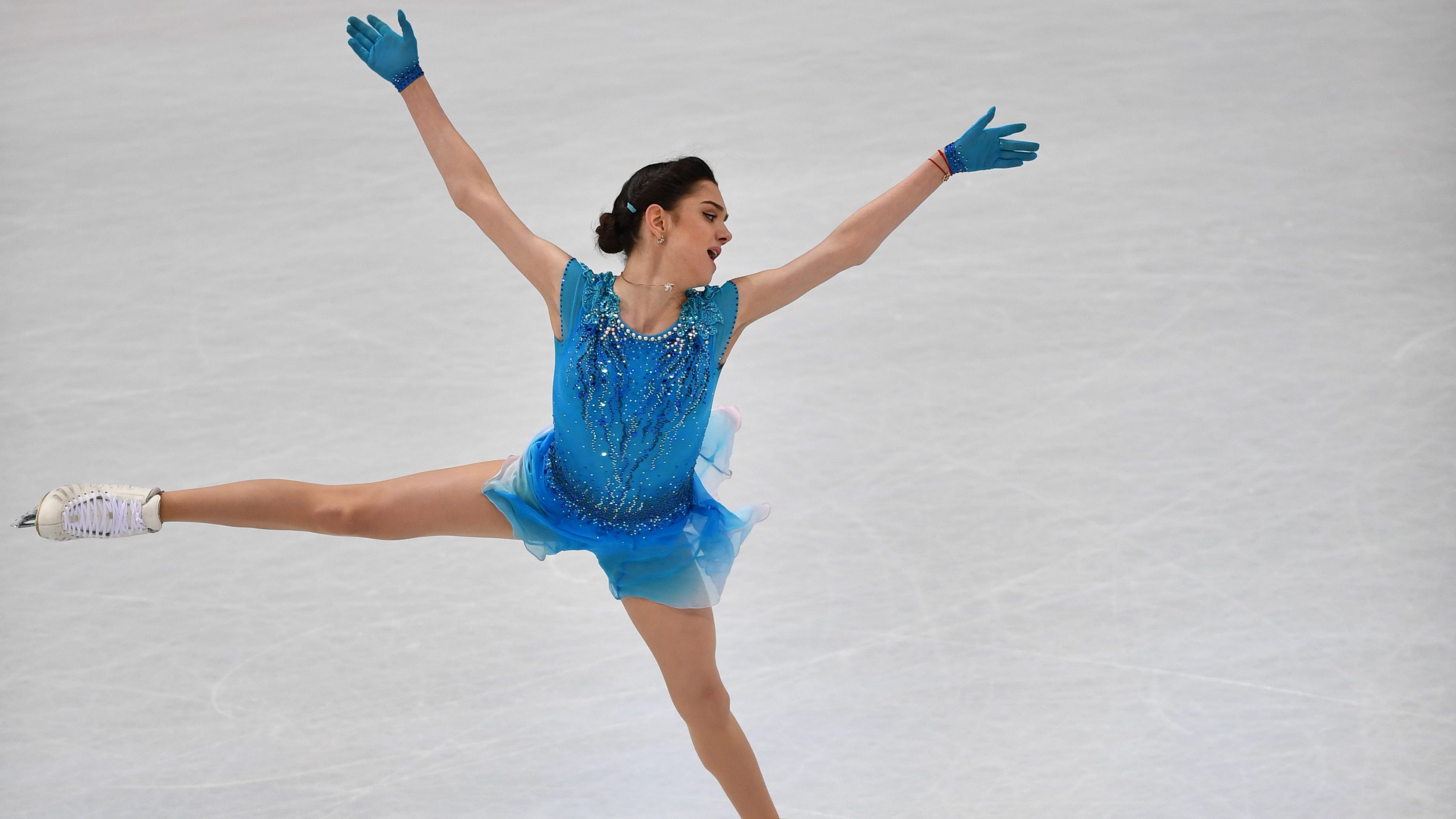
Alright, gather ‘round, my fellow humans who occasionally stare blankly at their screens while a tiny person defies gravity in sparkly spandex. We're talking about the women's free skate, specifically how it all shakes down and who gets to wear the ridiculously shiny medals. Think of this as your "Skating for Dummies, But Way More Fun" guide, served with a side of Olympic-level drama.
So, you've watched the short program, right? That was like the appetizer. A quick, zippy bite of what’s to come. The free skate? Oh, honey, that's the main course, the seven-course meal, the entire Thanksgiving feast rolled into one glorious, terrifyingly difficult performance. It’s where the real magic (and sometimes, the spectacular face-plants) happen.
The Structure: Basically a Figure Skating Recipe
Imagine a figure skater’s brain is a very organized pantry. The free skate is like pulling out all the ingredients and making a gourmet meal, but instead of flour and sugar, it’s triple axels and layback spins. It’s longer than the short program, giving our athletes more time to… well, skate. More time for pirouettes, more time for jumps, and crucially, more time to potentially forget a step and do an impromptu interpretive dance about the existential dread of landing a quad.
They've got a list of required elements, kind of like a scavenger hunt, but with significantly higher stakes and less chance of finding a dusty old sock. These elements are the building blocks of their routine. We're talking about jumps, spins, and step sequences. Each one has its own specific technical requirements, and if you tick all the boxes, you get points. Simple, right? If only life were as straightforward as a perfectly executed triple Lutz.
But it's not just about ticking boxes. Oh no. The judges want to see artistry! They want to see… expression! So, while the skater is busy launching themselves 10 feet in the air, they also need to look like they’re having an emotional epiphany or telling a deeply profound story through their movements. It’s like asking someone to solve a quadratic equation while simultaneously reciting Shakespeare and juggling flaming torches. No pressure.
The Jumps: Where Dreams Take Flight (or Go Splat)
Let's talk about the jumps, because, let's be honest, this is where the gasps (and sometimes the audible "oof"s) come from. You've got your singles, your doubles, your triples – these are the warm-ups. Then come the quads. Yes, quads. That means four full rotations in the air. Four! If you’ve ever tried to spin around four times in your living room, you’ll know it usually ends with you clutching a piece of furniture and questioning your life choices. These women do it on a slippery surface, at speed, with grace. It’s frankly absurd.
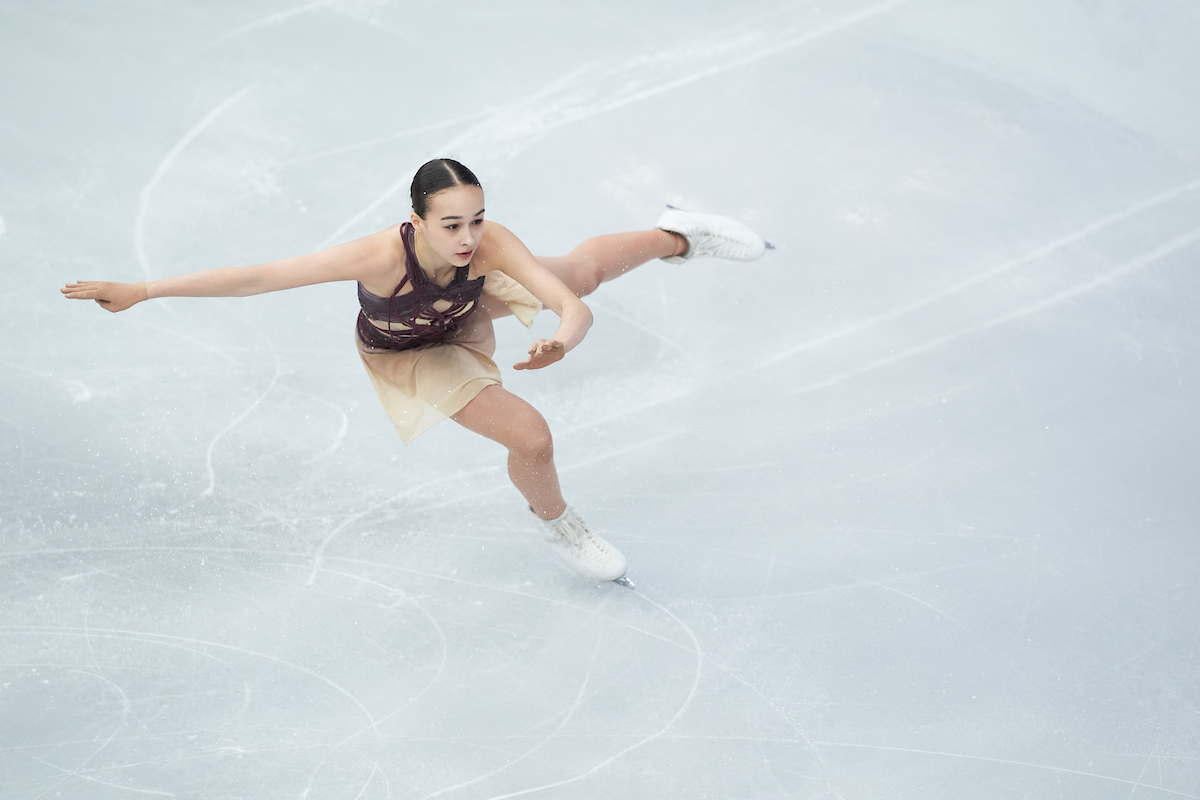
Each jump has a base value. A triple axel? Big points. A quad Salchow? Even bigger points. But here's the kicker: the judges don’t just give you points for trying a jump. They give you points for landing it. And not just landing it, but landing it well. Was it clean? Did you have good height? Was it controlled? Or did you… you know… do that thing where your legs flail like a startled octopus and you end up doing an unplanned sit-down?
This is where the "Grade of Execution" (GOE) comes in, which we’ll get to, but for now, just know that landing a jump is like solving a riddle. A very high-stakes, very cold riddle.
The Spins: Where They Get Dizzy for Your Amusement
Next up, the spins! These aren't your grandma's gentle twirls. These are like human centrifuges. They can be straight-line spins, sit spins, camel spins, and combinations of all of the above. The skaters are expected to hold these positions for a specific amount of time, with speed, and with their bodies doing contortions that would make a pretzel jealous.
The difficulty here lies in maintaining control while basically being spun into oblivion. Imagine trying to hold a perfect yoga pose while someone is aggressively nudging you. It’s a feat of strength and balance. And again, the judges are watching. Was the spin centered? Was it fast? Did they change positions smoothly? Did they, dare I say it, look artistic while doing it? Because apparently, even when you're dizzy enough to see stars, you're supposed to be conveying the profound sorrow of a wilting daisy.
The Step Sequences: The Choreography Olympics
And then there are the step sequences. This is where the skater shows off their footwork, their edge work, their turns, and their general ability to not trip over their own skates. It’s a chance for them to really show off their musicality and their connection to the music. Think of it as the figure skating equivalent of a really intense drum solo, but with more gliding and less hitting things with sticks.
These sequences need to incorporate various turns and steps, and they’re judged on their complexity and their execution. Did they travel across the ice? Did they use different edges? Did they make it look effortless? Because if it looks like they’re desperately trying not to fall, the judges will notice. And nobody wants to see that. Unless, of course, you're a secret fan of competitive falling, which, hey, no judgment.

The Scoring: Where Math Meets Mayhem
Now, for the part that makes most people’s eyes glaze over faster than a frozen pond in February: the scoring. It's a two-part system, so buckle up, buttercups.
1. The Technical Element Score (TES): The "Did You Actually Do the Thing?" Score
This is where all those jumps, spins, and step sequences get their due. Each element has a base value, like we talked about. The judges, using their highly trained eyes (and probably some futuristic technology), then assign a Grade of Execution (GOE) for each element. This GOE can range from -5 to +5. Think of it as a plus or minus on your homework assignment, but with more dramatic consequences.
A perfect landing? A beautiful spin? That’s a big plus for GOE. A wobbly landing? A sloppy spin? That’s a big minus. So, the TES is basically the base value of all your elements plus or minus the GOE for each. It's like adding up all the points you should have gotten and then subtracting points for every tiny mistake, or adding bonus points for every jaw-dropping success. It’s a delicate balance of doing everything right and then doing it exceptionally right.

Fun fact: Did you know that a panel of judges actually reviews every single element, frame by frame, after the competition to ensure accuracy? It’s like the Olympics have their own internal affairs department, but with more sequins.
2. The Program Component Score (PCS): The "Were You Actually Entertaining?" Score
This is where the artistry comes in. This is where the judges decide if you made them feel something. It’s broken down into five categories:
- Skating Skills: This is about how well you skate. Your edges, your flow, your control. Are you gliding like a majestic swan or shuffling like a confused penguin?
- Transitions: How smoothly do you connect one element to the next? Are there awkward pauses or do you flow from a jump into a spin like water?
- Performance: This is about your presence on the ice. Your confidence, your energy, your engagement with the audience. Are you shining like a disco ball or hiding behind your hair?
- Composition: This is about the choreography and the overall structure of your program. Is it interesting? Does it make sense? Is it a masterpiece or a chaotic jumble of moves?
- Interpretation of the Music: Do you actually match your movements to the music? Or are you just skating to the beat of your own internal drummer, who is apparently deaf?
Each of these components is scored on a scale of 0.25 to 10.00. And here’s the twist: these scores are then multiplied by a factor (which is different for the short and free programs, because why make things easy?) before being added to your TES. So, a slightly less technically perfect skate with incredible artistry can still win. It’s a balancing act, people!
The skater with the highest combined score from both the TES and PCS is crowned the champion. They’ve navigated the treacherous ice, executed their jumps with precision, spun until they saw stars, and hopefully, made us all feel a little something along the way. It’s a brutal, beautiful, and utterly captivating spectacle. Now go forth and impress your friends with your newfound knowledge of figure skating algebra!