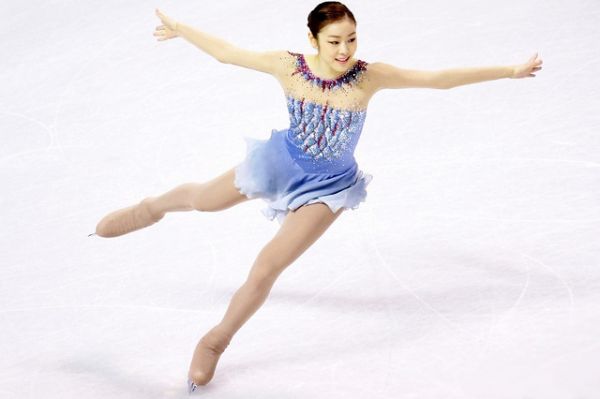
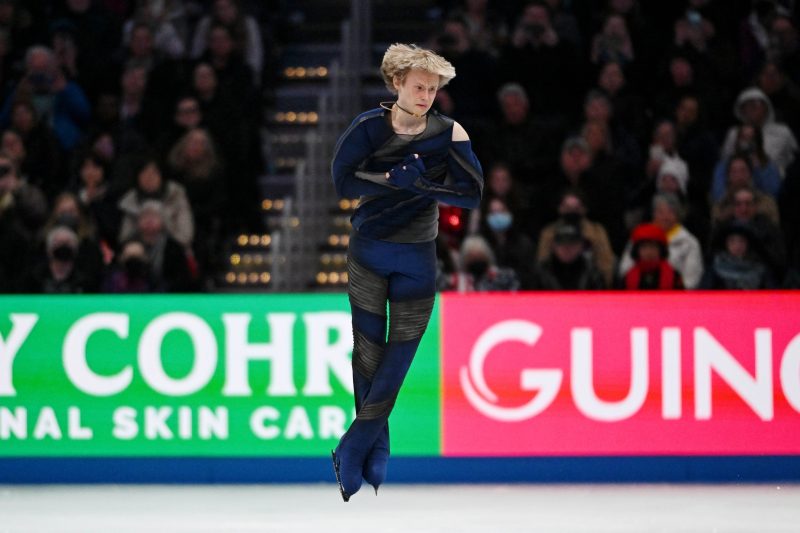
You're watching figure skating. The music swells, a skater pirouettes, and then… BAM! They land a jump that defies gravity. The crowd roars. You clap. But then comes the score. It's a little confusing, right? All those numbers, deductions for tiny wobbles, bonuses for seemingly impossible feats. It’s like trying to decipher ancient hieroglyphs while simultaneously trying to follow a squirrel on roller skates. But fear not, fellow fans! Let's take a peek behind the curtain of women's figure skating judging, and discover why those tiny, tiny points can make all the difference between a gold medal and a disappointed sigh.
At its heart, figure skating judging is a bit like grading a really fancy, high-stakes performance art piece. Imagine you're judging a school play. You're not just looking at whether the actors remembered their lines; you're looking at their energy, their costumes, how well they portrayed the emotions, and if they managed not to trip over the scenery. Figure skating judging is similar, but with way more sequins and a lot less stage fright.
There are two main parts to the score: the Technical Element Score (TES) and the Program Component Score (PCS). Think of TES as the "did they do the hard stuff?" score, and PCS as the "how beautifully and engagingly did they do it all?" score. Both are super important, and the judges meticulously break down every single movement.
The TES is where all those jumps, spins, and step sequences come in. Each element has a base value – a certain number of points it’s worth just for attempting it. For example, a triple Lutz is worth more than a double toe loop because, well, it’s significantly harder. But here’s where it gets fun: the judges also assign a Grade of Execution (GOE). This is where they say, "Okay, they did the triple Lutz, but was it amazing, or just… there?" They can add points for things like great height and distance on a jump, a perfectly centered spin, or incredibly smooth transitions. Conversely, they can deduct points for a shaky landing, a slow spin, or if the skater looks like they're about to spontaneously combust from the effort.
Now, the GOE is where those tiny margins start to matter. A jump that’s just "good" might get a +1 GOE. An absolutely spectacular, breathtaking jump could get a +4 or even a +5! That small difference of a few points might not seem like much on its own, but when you’re talking about multiple jumps, each with its own GOE, it adds up faster than you can say "quad Salchow." Imagine your favorite baker making cookies. One baker uses the exact recipe, and their cookies are good. Another baker uses the same recipe, but adds a secret pinch of magic, perfectly bakes them, and their cookies are divine. The difference is the execution, and that’s what GOE rewards.

The PCS is, in many ways, the soul of the performance. This score reflects how well the skater connected with the music, how fluidly they moved across the ice, their artistry, and how well they told a story. Judges look at things like skating skills (are their edges clean and controlled?), transitions (how seamlessly do they move from one element to the next?), performance (are they engaging and expressive?), composition (is the choreography interesting and well-put-together?), and interpretation of the music (do they seem to be living the music?).
This is where a skater like Yuzuru Hanyu (though he's a men's skater, the principle is the same!) or, in the women's field, someone like Evgenia Medvedeva, could shine. They don't just do the jumps; they perform them. Their skating has a quality that makes you forget you're watching a sport and instead feel like you’re at a ballet on ice. A tiny hesitation, a loss of flow between elements, or a blank expression can lead to deductions here too. It’s the difference between a robot executing a program and an artist painting a picture on the ice.

Sometimes, a skater might have a technically brilliant program, landing all the hardest jumps, but if their PCS scores are lower, they might lose out to someone with a slightly less difficult technical program but outstanding artistry and presentation.
And then there are the deductions. These are the penalties for the little mistakes that judges can't incorporate into GOE. Falling on a jump is a big one. Touching a hand down on a landing is another. Costume malfunctions (yes, they happen!) or even going over the time limit can result in deductions. These are like the "failed to follow instructions" penalties in a baking competition. Sometimes, a skater can have a near-perfect skate, but a single, costly fall can drop them down the rankings significantly. It’s the ice skating equivalent of accidentally dropping your perfectly decorated cake on the floor right before judging.

So, why do these tiny margins matter so much? Because figure skating is a sport of incredible precision. The difference between a perfectly rotated triple Axel and one that's slightly under-rotated might be milliseconds. The difference between a spin that’s perfectly centered and one that drifts just a little can be a matter of inches. These are the kinds of details that separate the good from the great, and the great from the champions.
It's why you’ll see skaters training for hours upon hours, not just on the big, flashy elements, but on the subtle nuances of their skating. It's about perfecting every edge, every arm movement, every facial expression. It's about making the impossibly difficult look effortless and beautiful. The next time you watch, try to look for these little things. Appreciate the artistry in the transitions, the power in the jumps, and the sheer joy (or determination) on the skaters’ faces. You might just find yourself appreciating the sport on a whole new level, understanding that in the world of ice, even the smallest glimmer of perfection can pave the way to victory.