So, I was grabbing my morning coffee the other day, and you know that little bell that dings when you walk into a cafe? It felt like it was dinging a new tune, a slightly more optimistic one. It got me thinking about those subtle shifts in the economic atmosphere, the ones that aren't plastered on every headline but are definitely humming in the background. It reminded me of how, a few months ago, everyone was talking about when the Fed might cut rates, and now, it feels like the conversation has shifted to how much and when exactly in July. It's like the market went from pondering a possibility to a pretty strong, almost undeniable, likelihood. And that, my friends, is what we’re diving into today: why the money markets are practically screaming that the Federal Reserve is going to slash interest rates this July.
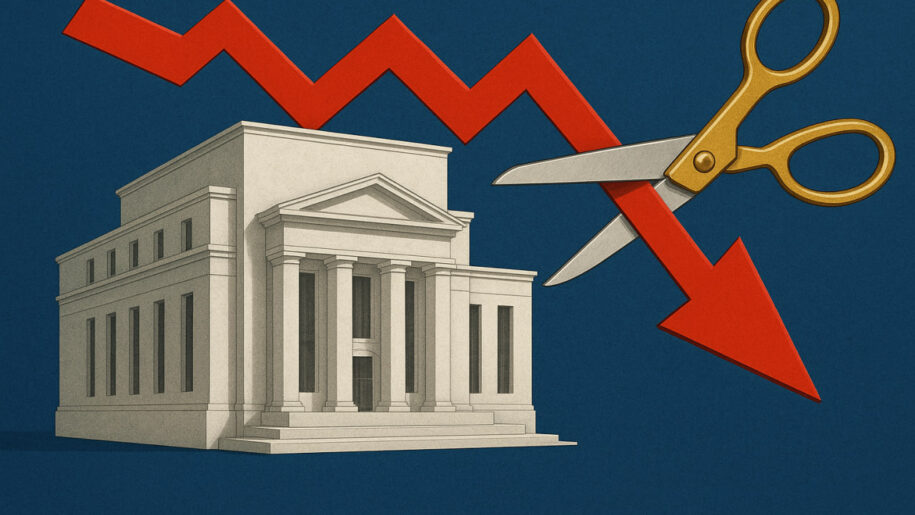
It’s a big deal, this Fed rate cut. Think of it like the central bank of the US giving the economy a bit of a pep talk, or maybe even a gentle nudge downhill. When they lower interest rates, it generally makes borrowing money cheaper. Businesses might be more inclined to take out loans to expand, and consumers might find it easier to finance big purchases like cars or homes. It’s supposed to stimulate spending and, in theory, boost economic activity. But here’s the thing: the market isn't just hoping for this. It’s acting like it’s a done deal. And when the market acts like something is a done deal, it’s usually worth paying attention to.
The Whispers Turned Into Roars
Remember the early days of this year? The Fed had been on a marathon of rate hikes to tame inflation, and the general consensus was that they’d probably keep rates high for a while. People were saying, "Maybe a cut in September," or "Perhaps by the end of the year." It was all very much in the realm of speculation. You’d hear economists on TV hedging their bets with phrases like "could potentially" or "if conditions are met." It was like trying to predict the weather a month out – lots of educated guesses, but no guarantees.
But then, something shifted. The economic data started telling a slightly different story. Inflation, while still a concern, wasn't spiraling out of control like it was a year or two ago. The job market, though resilient, showed some signs of cooling. And crucially, the money markets – these aren't your local banks where you deposit your paycheck, but rather the plumbing of the financial system where institutions lend and borrow vast sums of money, often overnight – started to react.
These money markets are incredibly sensitive. They’re like the financial world’s canary in the coal mine. When the people who operate within them, the big players who have a serious amount of skin in the game, start making bets on future interest rates, it’s a strong signal. And lately, those bets have been overwhelmingly pointing towards a July cut.
What Exactly ARE Money Markets? (And Why Should You Care?)
Okay, let’s break this down a bit, because it sounds super technical, but it's actually quite understandable. Money markets are essentially where very short-term debt is traded. Think of it as the place where banks and other financial institutions go to borrow or lend money for periods ranging from overnight to a few months. It's crucial for keeping the financial system flowing smoothly.
Now, the interest rates in these markets are heavily influenced by, and in turn, influence, the Federal Reserve's target for the federal funds rate. This is the rate that banks charge each other for overnight lending. When the Fed raises this rate, it ripples through the entire economy, making borrowing more expensive everywhere. When they lower it, the opposite happens.

The key takeaway here is that the participants in the money markets are constantly trying to predict what the Fed is going to do. They adjust their lending and borrowing rates based on their expectations of future Fed policy. And right now, their actions are screaming, "July cut!"
The Data Dots Are Connecting
So, what’s causing this newfound confidence in a July rate cut? It’s a confluence of factors, really. It’s not just one single piece of data, but a mosaic of information that’s painting a picture the market is increasingly comfortable with.
First, let's talk about inflation. For a long time, inflation was the boogeyman keeping the Fed awake at night. We saw those sky-high numbers, and the Fed’s response was to slam the brakes on by raising rates. But recent reports have shown that inflation is indeed cooling. It's not back to the Fed's 2% target yet, mind you, but it’s on a downward trajectory. Think of it like a very persistent party guest who’s finally starting to look at their watch and contemplate heading home, rather than still being the life of the party.
Then there’s the labor market. We've seen incredibly strong job growth for a while, which is great for workers but can also fuel inflation if wages rise too quickly. However, there are signs that this incredible pace is moderating. Job openings are still high, but perhaps not as red-hot as they were. Wage growth, while still positive, is showing signs of slowing down. The market is interpreting this as a sign that the economy isn't overheating, which gives the Fed more breathing room to consider cutting rates. It’s like the economy has shifted from a full-on sprint to a strong, sustainable jog.
And let’s not forget about consumer spending. While consumers have been remarkably resilient, there are some whispers that they might be starting to feel the pinch of higher interest rates and lingering inflation. If consumer spending, the engine of the US economy, starts to slow down meaningfully, the Fed might feel compelled to act to prevent a sharper downturn.

The Fed's Own Signals Matter, Of Course!
It's not just the data that the market is dissecting. The Federal Reserve itself, through its various communications – speeches by Fed officials, meeting minutes, and economic projections – provides crucial clues about its thinking. And lately, these signals have become increasingly dovish, meaning they’re leaning more towards easing monetary policy (i.e., cutting rates).
Think of Fed officials as giving out little breadcrumbs of information. For a while, those breadcrumbs were saying, "We're serious about fighting inflation, and we're not done yet." But more recently, the breadcrumbs have been saying, "We're encouraged by the progress, and we're starting to think about when it will be appropriate to ease up."
When multiple Fed officials start hinting at rate cuts, and especially when these hints start to align with the actual economic data, the market takes notice. It’s like seeing all your friends wearing the same concert t-shirt – you start to assume the band is going to play.
The Money Market's Crystal Ball
So, how are we so sure the money markets are pricing in a July cut? It’s all about the instruments they use. One of the most closely watched indicators is the
If you look at the pricing of these contracts, especially those maturing around the July Federal Open Market Committee (FOMC) meeting, you'll see that the market is assigning a very high probability to a rate cut. It’s like looking at the odds for a horse race; if one horse has overwhelmingly low odds, it means the bettors believe it’s a very likely winner.
When the probability of a rate cut, say, 25 basis points (which is 0.25%), reaches 70%, 80%, or even higher in these futures contracts, it’s a strong signal that the market believes this is happening. And recently, we've seen these probabilities consistently above the 80% mark for a July cut.
This isn't just a hunch. It's a reflection of sophisticated traders and institutions putting their money where their expectations are. They are actively adjusting their portfolios and strategies based on the expectation of a rate cut.
The "Pre-Priced" Effect
This is where it gets a bit ironic, and also a bit meta. Because the money markets are so confident in a July cut, they've already started to bake that expectation into current interest rates. What does that mean? It means that some of the effects of a future rate cut might already be felt before the Fed actually makes the move.
For example, if everyone expects short-term interest rates to fall in July, then borrowing costs for very short-term loans might have already started to creep down slightly in anticipation. It's like pre-ordering a popular item online; you know you're getting it, so the anticipation starts to shape your feelings about it even before it arrives at your doorstep.

This "pre-priced" effect can also influence longer-term rates, though to a lesser extent. It's a powerful illustration of how expectations drive market behavior. The market isn't just reacting to what the Fed will do, but also to what it thinks the Fed will do.
So, What’s Next?
While the money markets are heavily leaning towards a July cut, it's crucial to remember that nothing is set in stone until the Fed actually announces it. There’s always a possibility, however small, that new, unexpected economic data could emerge and change the Fed’s calculus.
For instance, if we suddenly see a surge in inflation or a surprising strengthening of the labor market in the coming weeks, the Fed might reconsider its stance. Or, conversely, if the economy shows signs of significant weakness, they might even consider a larger cut or an earlier one.
The FOMC meetings are always a big event, but the upcoming ones feel particularly charged with anticipation. The market has built a narrative around a July cut, and it will be fascinating to see if the Fed’s actions align with the market’s confident predictions.
For us on the sidelines, it’s a good reminder to stay informed. Keep an eye on those inflation numbers, the jobs reports, and of course, any official statements from the Fed. The economic landscape is always shifting, and understanding these signals can help us make sense of what’s happening around us, from the coffee shop bell to the broader financial markets. It's a complex dance, but when the music of the money markets starts to play a clear, consistent tune, it's usually worth listening very carefully. And right now, that tune is definitely singing about a July rate cut. Pretty wild, isn't it?