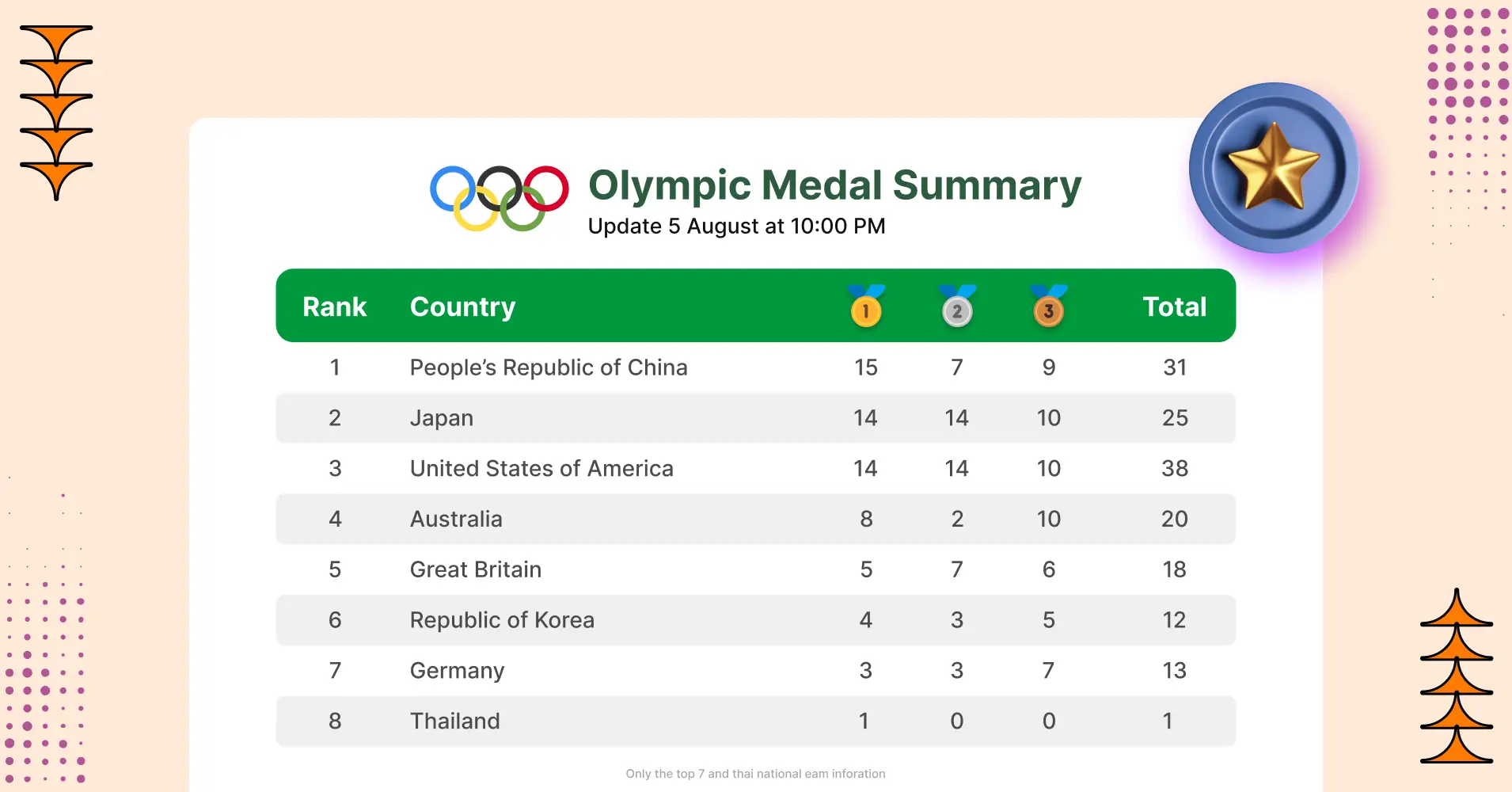
The Olympics! Just the word conjures up images of incredible athletic feats, nail-biting finishes, and of course, those coveted medals. But have you ever wondered how the dust settles and who ends up at the top of the medal table? It's a question that sparks friendly debates in pubs and offices worldwide, and understanding it can be surprisingly fun, even if you're not a sports statistician!
Think of the medal table as a dynamic scoreboard, a constantly shifting snapshot of national pride. It’s not just about who wins the most gold medals; it’s a whole system! Generally, countries are ranked by the number of gold medals first. If there's a tie, then silver medals are considered, and then bronze. This hierarchy ensures that the ultimate symbol of victory – the gold – holds the most weight. It’s a system that keeps everyone on the edge of their seats, as a single dramatic win can send a nation soaring up the rankings!
Why do the rankings change so fast, you ask? It's the beauty of a multi-event competition! Unlike a single race, the Olympics span hundreds of events across multiple days. A country might start slow, perhaps excelling in sports that are held earlier, only to surge ahead as their track and field stars or swimmers hit the scene. Conversely, a nation that dominates early might see its position challenged as other sports commence. It’s a thrilling ebb and flow, a constant dance of victories and near-misses.
Now, you might be thinking, "What does this have to do with me, an artist, a hobbyist, or just someone who enjoys learning new things?" More than you might imagine! Understanding how the medal table works is like dissecting a complex puzzle. It encourages analytical thinking and pattern recognition. For artists, the sheer drama and narratives unfolding in the rankings can be incredibly inspiring for their work – think of paintings depicting underdog victories or sculptures representing the pursuit of glory. Hobbyists can dive deep into the statistics, creating their own predictive models or even designing unique visualizations of the data. And for casual learners, it’s a fantastic way to engage with a global event, picking up concepts of ranking, probability, and competitive strategy without even realizing it!

Even if you're not crunching numbers, appreciating the medal table's fluidity can spark creativity. Perhaps you'll try your hand at drawing your own fictional "medal table" for your favorite book characters, or create a silly ranking of household chores! The core principle is simple: a clear set of rules leads to a fascinating outcome.
What makes it all so enjoyable? It’s the human element. It's about the dedication, the years of training, and the sheer joy of seeing nations unite behind their athletes. The medal table is more than just a list; it's a reflection of dreams realized, hard work rewarded, and the incredible spirit of sport. So next time the Olympics roll around, don't just watch the races – follow the scoreboard and see how the drama unfolds!