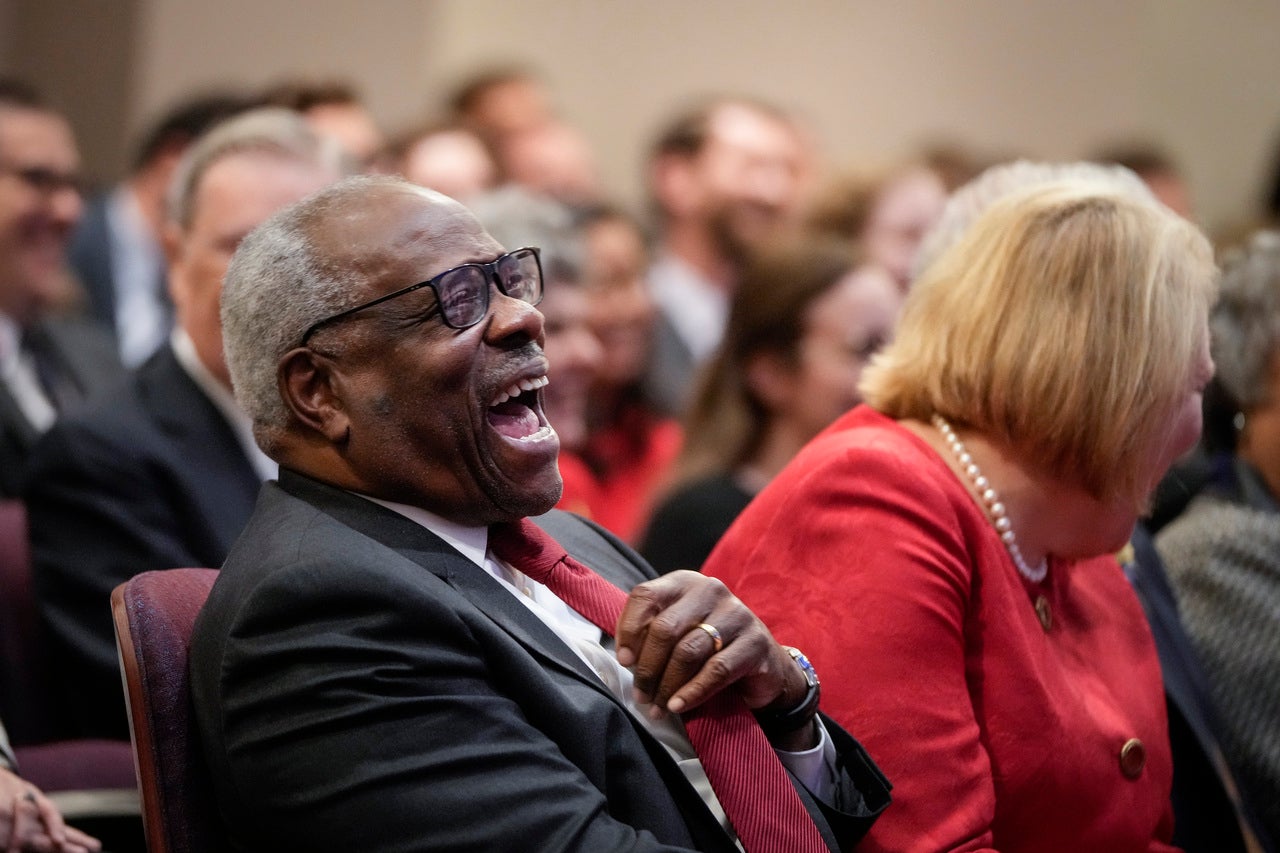
So, picture this: I’m at my local coffee shop, the one with the grumpy barista who secretly makes the best latte in town. I overhear two folks – they looked like they’d been debating for a while – arguing about… well, it was about who should pay for their friend’s ridiculously expensive, artisanally-sourced, single-origin coffee. One guy was adamant, "He ordered it, he pays!" The other was muttering about "fairness" and how "we should all chip in." It got surprisingly heated, which, let’s be honest, is peak coffee shop drama.
And it got me thinking, in a weird, caffeine-fueled way, about how these kinds of fundamental questions – who pays, who benefits, who gets to decide – trickle all the way up to the highest levels of our government. Specifically, I’ve been chewing on the whole tariffs thing, and how a certain Supreme Court justice, Justice Clarence Thomas, might just be the unlikely MVP in deciding the fate of these government-imposed taxes on imported goods. Yeah, I know, tariffs and the Supreme Court. Sounds like a snooze-fest, right? But stick with me, because this is actually pretty fascinating, and potentially a really big deal for all of us.
You see, the Supreme Court isn't usually the place where we hash out trade policy. That’s typically Congress's job. But sometimes, sometimes, these big economic questions end up in their lap because of some technical legal dispute. And right now, there's a case brewing, or at least the potential for one, that could put Justice Thomas squarely in the spotlight. We’re talking about the power of the executive branch to impose tariffs, and whether that power has been stretched a bit too far.
Now, when I think about Justice Thomas, my mind doesn't immediately jump to economic policy or trade law. He’s known for a lot of things, sure, but often it’s his originalist judicial philosophy that gets the most attention. He’s all about what the Constitution meant when it was written, way back when powdered wigs were the height of fashion. And that’s where things get interesting for tariffs.
The Curious Case of Congressional Power and Executive Reach
Historically, the power to regulate commerce with foreign nations, including setting tariffs, has been seen as a core congressional power. The Constitution is pretty clear on this. Article I, Section 8 explicitly grants Congress the power to "lay and collect Taxes, Duties, Imposts and Excises." That’s the bedrock. Congress is supposed to be the one deciding if we have tariffs, how much they are, and who they apply to.
But then, things get a little… fuzzy. Over the years, Congress has passed laws that give the President, the executive branch, a whole lot of discretion in this area. Think of things like the Trade Act of 1974. These laws basically say, "Hey Mr./Madam President, if you think it's necessary for national security or economic reasons, you can go ahead and impose some tariffs." It’s like giving your kid permission to eat candy, but then they also decide they want to raid the entire candy aisle. The initial permission is there, but the scope of what they do with it is the big question.
And this is where the current legal wrangling might come in. Companies that are hurt by these tariffs, or groups that oppose them, are looking for ways to challenge them in court. They’re arguing that presidents have overstepped their bounds, using these congressionally-granted powers in ways that Congress never intended. They’re saying, "Look, you can’t just unilaterally decide to slap tariffs on everything because you feel like it. That’s our job, Congress's job!"
So, the legal question boils down to: Where does Congress's delegation of power to the President end? Has the President, through various executive actions and interpretations of laws, essentially taken a power that belongs to Congress and made it their own? This is a classic separation of powers argument, and the Supreme Court loves those. It’s like a legal puzzle, and they’re the ones who get to put the pieces together.
Justice Thomas: The Unexpected Tariff Arbiter?
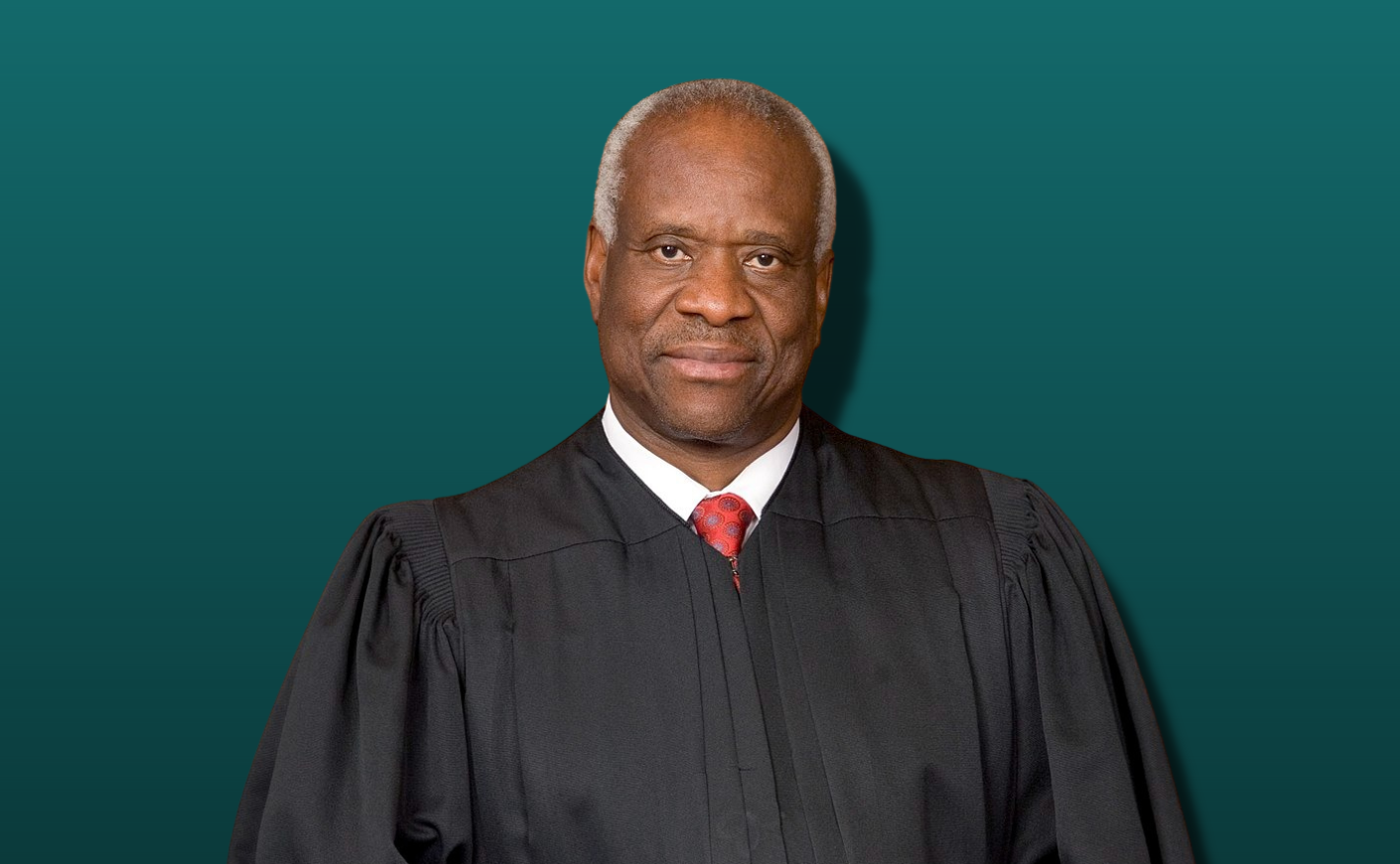
Now, why Justice Thomas? Well, it all comes back to his originalist perspective. When he looks at the Constitution, he’s not just looking for what’s convenient or what’s become the norm. He’s looking for what the founders meant. And when it comes to the power of Congress versus the power of the President, especially concerning economic matters like tariffs, his deep dive into historical understanding can be incredibly influential.
Think about it. If Justice Thomas believes that the framers of the Constitution intended for Congress to have the primary, if not exclusive, say on tariffs, then he might be more inclined to scrutinize and potentially rein in presidential power in this area. He might say, "Hold on a minute. The Constitution clearly assigns this power to Congress. While Congress might have passed a law delegating some authority, the way this power has been exercised by the executive branch goes far beyond what was originally intended or constitutionally permissible."
This isn't to say he’s against tariffs in principle. His judicial philosophy is about the source of the power and the limits on it, not necessarily about the policy itself. So, if a president uses tariffs in a way that he believes exceeds the constitutional authority delegated by Congress, he might be a vote to strike it down. Conversely, if he believes the executive action falls within a constitutionally sound interpretation of existing laws and historical practice, he might vote to uphold it.
What makes his potential vote so significant is that these cases often come to the Supreme Court with a deeply divided lower court history, or they involve novel legal questions. The Justices might be split, and in a court of nine, any one vote can be the deciding factor. And when you have a justice with a strong, distinct judicial philosophy like Justice Thomas, whose interpretations can sometimes be less swayed by prevailing political winds, his vote can carry particular weight.
It’s kind of ironic, isn’t it? We’re talking about modern-day trade wars and global economics, and the potential deciding vote might come from a justice whose legal compass is firmly pointed towards the 18th century. But that's the beauty and the complexity of the law. It’s not just about what’s happening now, but about what the fundamental rules of the game are, as laid out centuries ago.

The Stakes: More Than Just Coffee Beans
So, why should you, the person who just wants a good cup of coffee without a side of international trade disputes, care about this? Because tariffs have a ripple effect. They affect the prices of almost everything we buy, from the clothes on our backs to the electronics in our pockets. They can impact American jobs, both positively and negatively, depending on the industry and the specific tariff.
When presidents have broad power to impose tariffs, it can create a lot of uncertainty for businesses. Imagine you're a company that imports parts to build your product. If the government suddenly slaps a new tariff on those parts, your costs skyrocket overnight. That uncertainty makes it hard to plan, hard to invest, and ultimately, can impact the economy as a whole. And when that power is wielded by the executive branch, sometimes with less transparency and deliberation than a legislative process, it can feel undemocratic to some.
This is precisely where the legal challenges to presidential tariff powers come into play. If courts, and potentially the Supreme Court, decide that presidents have gone too far, it could mean a significant rebalancing of power between the executive and legislative branches. It could mean that future tariffs would require more direct input from Congress, which, in theory, is a more representative body.
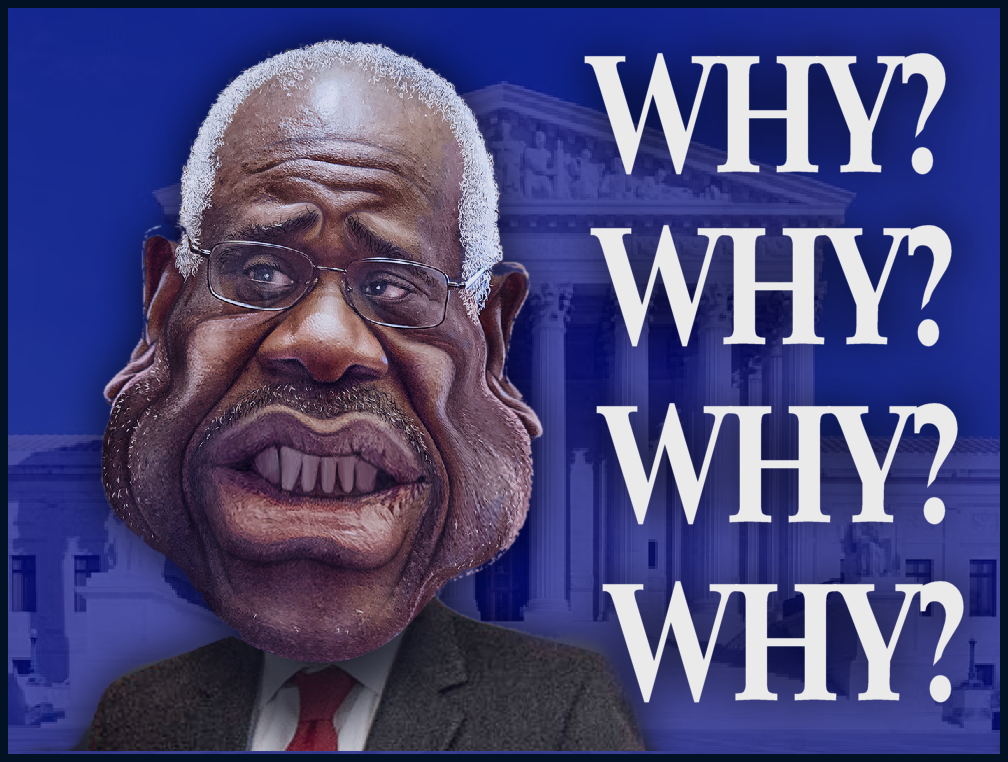
Think of it as a thermostat. Congress sets the thermostat for tariffs. The President might have a dial to adjust the temperature a little. But what if the President is trying to crank the heat up to 100 degrees, when the thermostat was only ever designed to go to 75? That's the kind of overreach these legal challenges are trying to address.
And Justice Thomas, with his commitment to the original meaning of the Constitution, could be the one to say, "Nope, that dial isn't supposed to go that high. Go back to Congress." His interpretation of the separation of powers, his understanding of the historical allocation of authority, could be the key to defining the limits of presidential tariff power.
It’s a complex area, and honestly, even the lawyers arguing these cases are wrestling with intricate legal doctrines. But at its heart, it’s about fundamental questions of who holds power in our government and how that power should be exercised. And in a court that often operates on narrow margins, a justice with a clear and consistent judicial philosophy can be the swing vote that shapes the outcome, not just for this particular tariff dispute, but for the broader understanding of presidential authority for years to come.
So, the next time you’re enjoying that (hopefully not excessively tariffed) cup of coffee, spare a thought for Justice Clarence Thomas. He might just be the quiet force behind deciding how much power the President really has to tax the things we buy. It’s a testament to how deeply interconnected our legal system is, and how even the most seemingly niche legal battles can have a profound impact on our everyday lives. Pretty wild, right? It’s definitely something to keep an eye on. And maybe, just maybe, it’ll make you think twice the next time you’re arguing with a friend about who should pay for that overpriced coffee.


