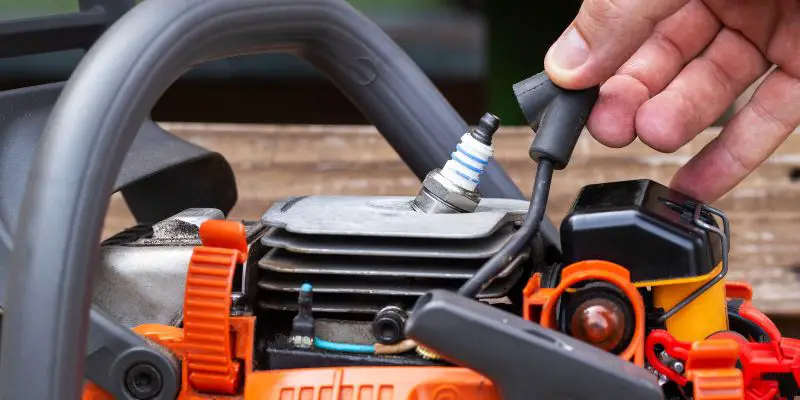
Ah, the trusty Husqvarna chainsaw. That roaring beast of a machine, capable of transforming a fallen giant into neat, manageable pieces. For many of us, it’s more than just a tool; it’s a partner in our outdoor adventures, a key player in our yard-taming quests, and sometimes, even a source of a good old-fashioned, slightly grimy, bonding experience.
And when your reliable companion starts to sound a little… well, off, it can be a bit like a loved one clearing their throat in a most unconvincing way. You know something’s up, and you want to help them find their voice again. That’s where the magical, and often misunderstood, carburetor comes in.
Think of the carburetor as the chainsaw's lungs, but way more complicated and with a lot more tiny screws. It’s responsible for mixing the perfect amount of fuel and air to keep your Husqvarna humming along like a happy, albeit very loud, bumblebee. When that mix is just a smidge off, your chainsaw might sputter, cough, or refuse to rev with its usual gusto. It's like it’s trying to tell you a secret, but it keeps getting its words tangled.
Now, before you imagine yourself knee-deep in tiny springs and gaskets with the intensity of a bomb disposal expert, take a deep breath. Adjusting your Husqvarna's carburetor is often simpler than you think. It’s less about rocket science and more about listening. Yes, listening to your chainsaw. It has feelings, you know. Well, sort of.
The most common culprits for a chainsaw’s mood swings are its little adjustment screws. There are usually a couple of them, and they’re like tiny volume knobs for your engine’s personality. You’ll often see them labeled with an 'H' for high speed and an 'L' for low speed. These are the main characters in our adjustment drama.
The 'L' screw is like the chainsaw's idle chatter. If it's too lean, your chainsaw might want to stall when you let off the throttle, as if it's suddenly shy. Too rich, and it might sound a bit gurgly, like it’s trying to sing with a mouthful of sawdust. You want it to purr, not to gargle.
The 'H' screw is its roaring, wood-chopping voice. If it's too lean, your chainsaw might bog down when you really put it to work, refusing to unleash its full power. Too rich, and it might smoke a bit too much, like a grumpy old man with a pipe. You want a strong, clear roar, not a wheezing whisper or a smoky puff.

The real trick, and where the fun begins, is in finding that sweet spot. It’s a bit like tuning a musical instrument, but with a much higher chance of getting your hands dirty. You’re aiming for that perfect symphony of engine sounds that says, "I’m ready to conquer this log!"
So, how do you actually do it? Well, you’ll need a small screwdriver, usually a flathead, that fits those little screw heads. And a willingness to be patient. Patience, my friends, is a chainsaw owner's superpower. It’s right up there with knowing how to sharpen a chain properly.
Start by gently turning the screws in and out. We’re talking tiny, minuscule adjustments here, like a whisper of a turn. A quarter turn might make all the difference. It’s like giving your chainsaw a gentle nudge in the right direction. No need to go all Hulk smash on it!
You’ll be listening intently as you make these little adjustments. Does the engine sound smoother? Does it rev up more freely when you briefly squeeze the throttle? Is it holding its idle without trying to quit on you? These are the crucial questions you’re asking your mechanical friend.

Sometimes, the 'L' screw adjustment is best done when the saw is just idling. You want it to be steady, not flaring up or threatening to die. It’s like a polite greeting before the main event.
Then, you’ll move on to the 'H' screw. This one is best tested under a bit of load, though not a full-on chopping session to start. A quick rev, maybe a very light touch on a small piece of wood, will tell you if it's happy. You’re listening for that clean, crisp acceleration, no hesitation, no sputtering.
It's a bit of a dance. You adjust, you listen, you adjust again. You might go back and forth between the 'L' and 'H' screws, because they can influence each other. It’s like a delicate conversation between two parts of your chainsaw’s brain.
And when you finally get it right? Oh, the satisfaction! It’s a feeling akin to finding that last missing puzzle piece, or perfectly nailing a tricky recipe. Your Husqvarna will roar back to life, eager and strong, ready to tackle whatever you throw at it.

There's a certain heartwarming charm in bringing a tool back to its prime with your own two hands. It’s a tangible connection to the machine, a partnership forged in sawdust and the smell of two-stroke. You're not just operating it; you're understanding it, and helping it perform at its best.
Think of all the logs you’ve conquered together, the fences you’ve mended, the firewood you’ve created. Your Husqvarna has been there for you. A little carburetor adjustment is simply you being there for it, ensuring your adventures continue smoothly.
It’s a reminder that even complex machines can be tamed with a bit of patience, observation, and a willingness to get your hands a little grubby. And who knows, you might even find yourself having a quiet, grimy conversation with your chainsaw, thanking it for its service. It’s those little moments, those unexpected connections, that make owning a tool like a Husqvarna chainsaw so rewarding.
So next time your chainsaw sounds a bit under the weather, don't despair. Grab your screwdriver, put on your listening ears, and embark on this small, satisfying journey. You might just be surprised at how good it feels to help your roaring friend find its perfect voice again.

It's like giving your chainsaw a little hug, but with tiny screws and a lot more noise!
And remember, safety first! Always make sure your chainsaw is off and cool before you start tinkering. No one wants a surprise rev when they're trying to be a mechanical maestro.
The hum of a perfectly tuned chainsaw is a beautiful sound. It's the sound of power, efficiency, and a job well done. And it all starts with a few turns of those little screws.
So go forth, brave carburetor adjuster! May your Husqvarna purr like a kitten and roar like a lion, all thanks to your skillful hands and attentive ears.
This little dance with the carburetor is a secret handshake between you and your machine. It’s a testament to the bond we form with the tools that help us shape our world.