Alright, let's talk about something that sounds a little intimidating at first glance: exponents and exponential functions. Yeah, I know, the words themselves can send shivers down your spine, conjuring up images of complicated math problems scribbled on a whiteboard at 8 AM. But stick with me here, because while the test might feel like a dragon you have to slay, the concepts behind it are actually lurking in your everyday life, sometimes in the most surprising and frankly, hilarious ways.
Think about it. Exponents are basically just a fancy shorthand for repeated multiplication. You know, instead of writing 2 x 2 x 2 x 2 x 2, we just slap a little ‘5’ up there and call it 2 to the power of 5. It’s like saying, "Hey, I'm feeling a bit lazy today, so I'm going to use this shortcut." We do this all the time without even realizing it. Imagine you're telling your friend about that insane pizza you ordered. "It had, like, a gazillion toppings!" you exclaim. A gazillion is just a way of saying "a whole heck of a lot," which, in math terms, might be represented by a really big exponent. It’s a way of compressing information, making things more manageable.
And exponential functions? Those are the ones that describe things that grow or shrink super fast. Think about that time you opened a bag of chips right before your friends arrived. Within minutes, the bag was… well, let's just say it was exponentially diminished. Or consider the spread of that really catchy song on TikTok. It starts with a few people, then suddenly, everyone and their dog is doing the dance. That's a classic case of exponential growth, a snowball effect on steroids. It’s the math behind the "viral."
So, the upcoming unit test on this topic? Don't let it scare you. Think of it as a chance to finally understand the mathematical superpowers behind some of the things you experience daily. It’s like learning the secret sauce to why things get big, fast, or small, fast.
The Sneaky Simplicity of Exponents
Let's break down exponents first. We’ve got our base, which is the number we’re multiplying, and our exponent, which is the little number floating up top that tells us how many times to multiply the base by itself. So, 3 squared (3²) is just 3 x 3. Easy peasy. 3 cubed (3³) is 3 x 3 x 3. Still with me? Good.
Now, where it gets interesting is when those exponents get a bit bigger. Imagine you’re building with LEGOs. If you have 2 bricks, that’s 2¹. If you double that pile, you have 4 bricks, which is 2². Double it again, and you have 8 bricks, 2³. And so on. Each time you double, you’re essentially multiplying by 2. So, if you had 2 to the power of 10 (2¹⁰), you’d have a whole darn pile of LEGOs! It’s how quickly things can add up when you’re dealing with repeated actions.

Think about your social media follower count. If you’re just starting, you might gain a follower here and there. But once you hit a certain point, and your content really resonates, suddenly you can see that number exploding. That’s the power of exponential growth in action. It’s not just a linear climb; it’s a rocket launch.
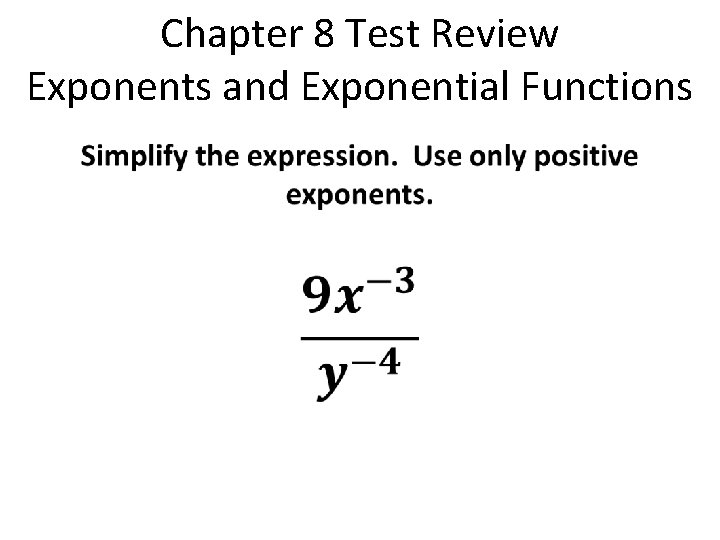
And what about negative exponents? Don't let those little minus signs fool you. They’re not saying "subtract me!" They’re actually saying “flip me over.” So, 2 to the power of -3 (2⁻³) is the same as 1 divided by 2 to the power of 3 (1/2³). It’s like saying, "Okay, I’ve gone too big, let me shrink back down." Think about a rumor spreading. It starts small, grows, and then eventually, maybe it starts to fade and become less significant. Negative exponents are the mathematical equivalent of that fading glory.
Zero exponent? That’s a weird one, but it’s actually super important. Anything, anything to the power of zero, is just 1. Even that one weird sock you always lose in the wash. If that sock had a mathematical identity and was raised to the power of zero, it would still be 1. It's like a mathematical reset button. It doesn’t matter how big or small the base is, raising it to the power of zero brings it back to a neutral, fundamental value. It's a bit like how no matter how many sprinkles you put on a cupcake, the cupcake itself is still fundamentally a cupcake. It’s a reliable constant in the wild world of exponents.
Exponential Functions: The Rollercoaster of Growth (and Decay)
Now, let’s zoom out to exponential functions. These are the functions that really showcase that rapid change. They’re usually in the form of f(x) = a * bˣ, where ‘a’ is your starting point, ‘b’ is your growth or decay factor, and ‘x’ is your time or whatever variable is causing the change.
Imagine you deposit some money into a savings account that earns interest. That interest gets added to your principal, and then the next time, you earn interest on the original amount plus the previous interest. This is compound interest, and it’s a beautiful, if sometimes slow, example of exponential growth. Your money isn’t just growing; it’s growing on the growth! It’s like planting a tiny seed that, over time, turns into a massive oak tree.
Conversely, think about depreciation. That brand new car you bought? The moment you drive it off the lot, its value starts to drop. It’s not a steady, predictable drop; it’s often more pronounced at the beginning and then slows down. That’s exponential decay. It’s like a deflating balloon – the air rushes out quickly at first, and then the rate slows as the balloon gets flatter.
Or consider a piece of perfectly good cheese left out on the counter. It doesn't just sit there serenely; it starts to develop character. Mold spores, like tiny little mathematicians, are doing their exponential thing, multiplying like crazy. The longer it's out, the more "exponentially diverse" it becomes. Hopefully, your unit test won't involve any moldy cheese, but it’s a good mental image for rapid proliferation.

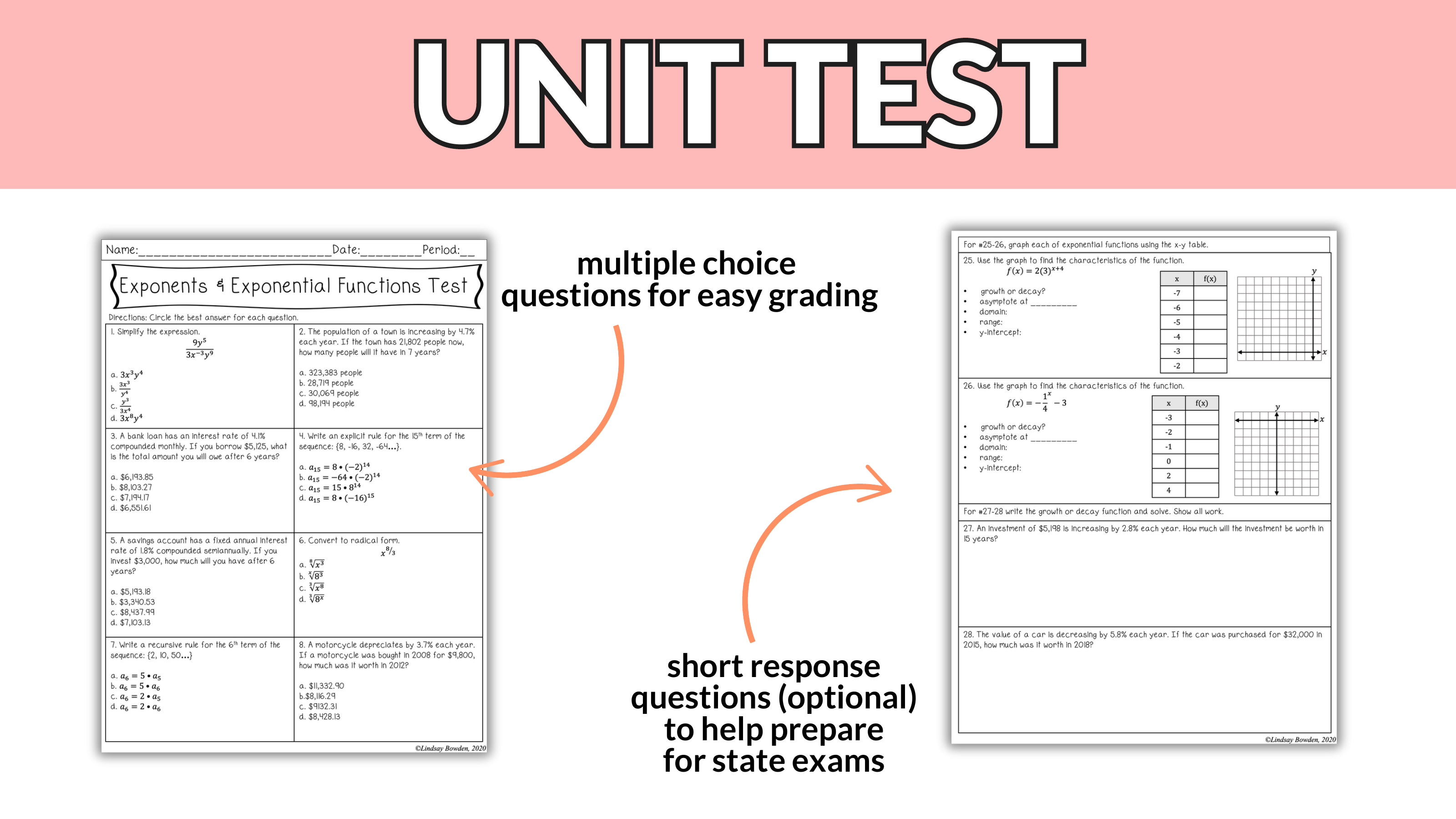
The test might throw some real-world scenarios at you. Maybe it's about the spread of a virus (not a fun thought, but mathematically relevant), or the population growth of a certain animal. The key is to identify that starting point (that ‘a’), the rate of change (that ‘b’), and what’s driving that change (that ‘x’).
And sometimes, the problems are designed to trick you. They might present a scenario that looks exponential but is actually linear. It’s like mistaking a snail's pace for a cheetah's sprint. You’ve got to look for that consistent multiplicative increase or decrease, not just an additive one. A linear function is like adding $5 to your pocket money every week. An exponential function is like your pocket money doubling every week – now that’s a math dream!
Preparing for the Unit Test: Your Exponent Survival Guide
So, how do you tackle this unit test without feeling like you're facing a mathematical monster? First off, don't panic. Take a deep breath. Remember that LEGO analogy? Or the pizza analogy? These concepts are grounded in things you already understand, even if you didn't know they had fancy math names.
Practice, practice, practice. It sounds cliché, but it’s true. Work through those textbook problems. If you’re stuck, try to relate them back to real-life examples. Can you imagine a bacterial colony in a petri dish? That’s exponential growth. Can you imagine the half-life of a radioactive substance? That’s exponential decay.

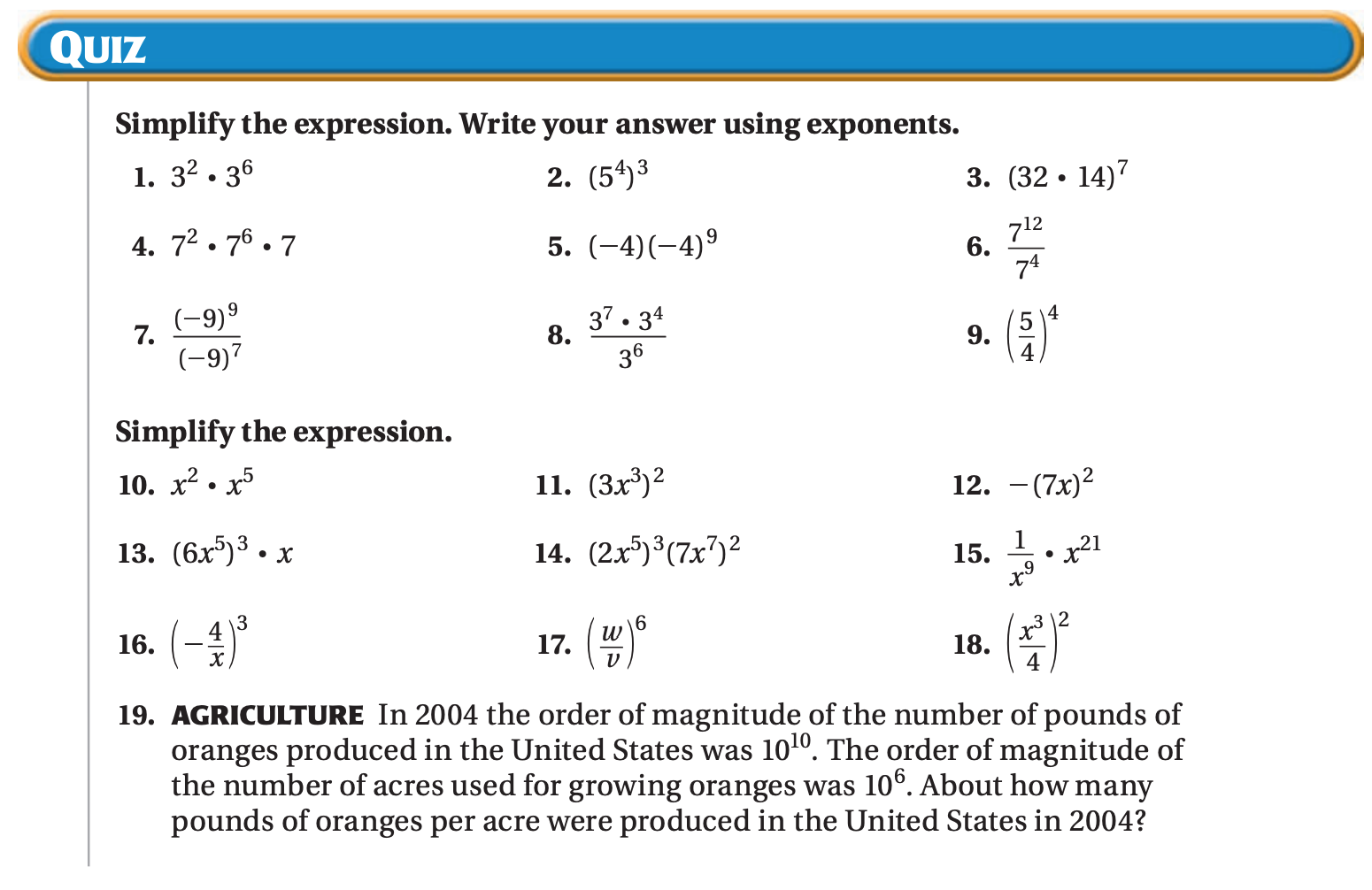
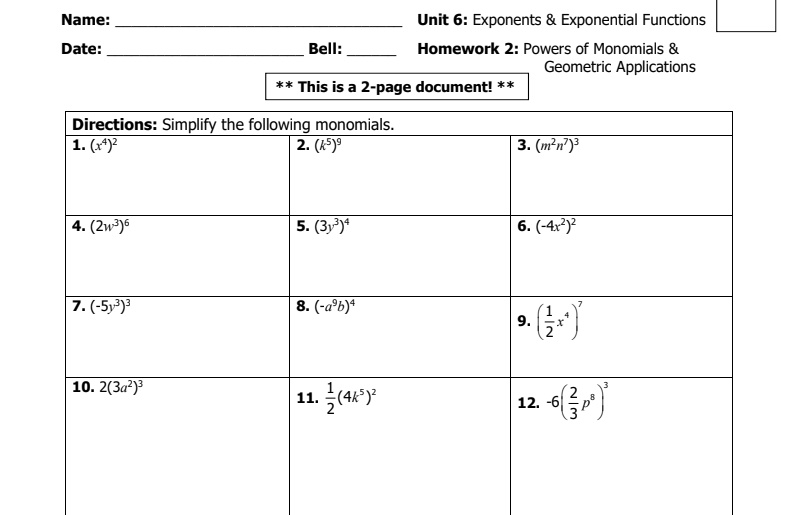
Understand the rules of exponents. They’re like the grammar of this mathematical language. Knowing that xᵃ * xᵇ = xᵃ⁺ᵇ is like knowing how to conjugate a verb. It allows you to manipulate expressions and solve problems more efficiently. And the rule (xᵃ)ᵇ = xᵃᵇ? That’s like the shortcut for putting your laundry away – one big fold instead of a million little ones.
Visualize the graphs. Exponential functions create curves, not straight lines. An exponential growth graph shoots upwards like a rocket, while an exponential decay graph hugs the x-axis but never quite touches it. Seeing these graphs can help you understand the behavior of the functions.
Don't be afraid to ask for help. Your teacher, your classmates, even a friendly math tutor – they’re all there to support you. Sometimes, just hearing something explained in a different way can make all the difference. It’s like trying to assemble IKEA furniture; sometimes you need a second pair of eyes to figure out which way that weird little dowel is supposed to go.
Remember, this unit test isn't designed to make your life miserable. It's a chance for you to show what you've learned about a powerful mathematical concept. Think of it as leveling up in a video game. You've acquired new skills, and now it's time to demonstrate your mastery. So, go in there with confidence, armed with your knowledge of repeated multiplication, rapid growth, and the occasional disappearing pizza. You’ve got this!