
Hey there, curious minds! Ever feel like your brain is a super-powered disco ball, constantly flashing with signals? Well, it pretty much is! And today, we're going to dive into a little secret sauce that makes all that magic happen. Get ready to have your synapses tingled, because we're talking about how those tiny electrical whispers in your brain all add up. Ever wondered where all those "yes, yes, yes!" and "whoa, hold on!" signals finally meet to decide what you do next? The answer, my friends, is at the axon hillock!
Yep, the axon hillock! Sounds a bit like a quirky little dive bar, doesn't it? Maybe it is, but it's a dive bar where crucial decisions are made, and it's happening inside your head right now. Think of your brain cells, those amazing neurons, as tiny little communicators. They're constantly sending messages back and forth, zipping through your nervous system like the fastest postal service you can imagine. And these messages aren't just simple "hello"s. They're complex electrical charges, and they come in two main flavors: excitatory and inhibitory.
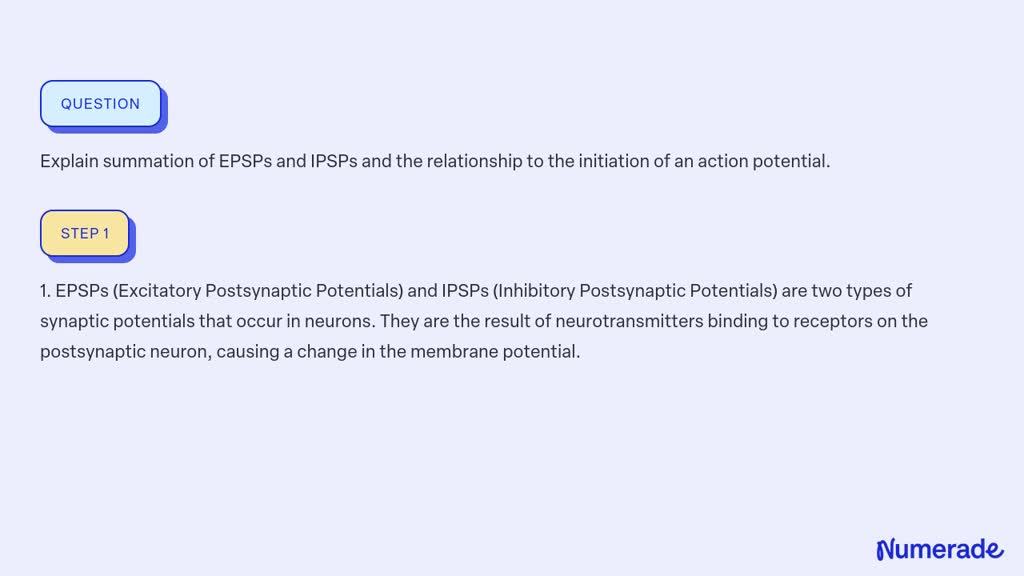
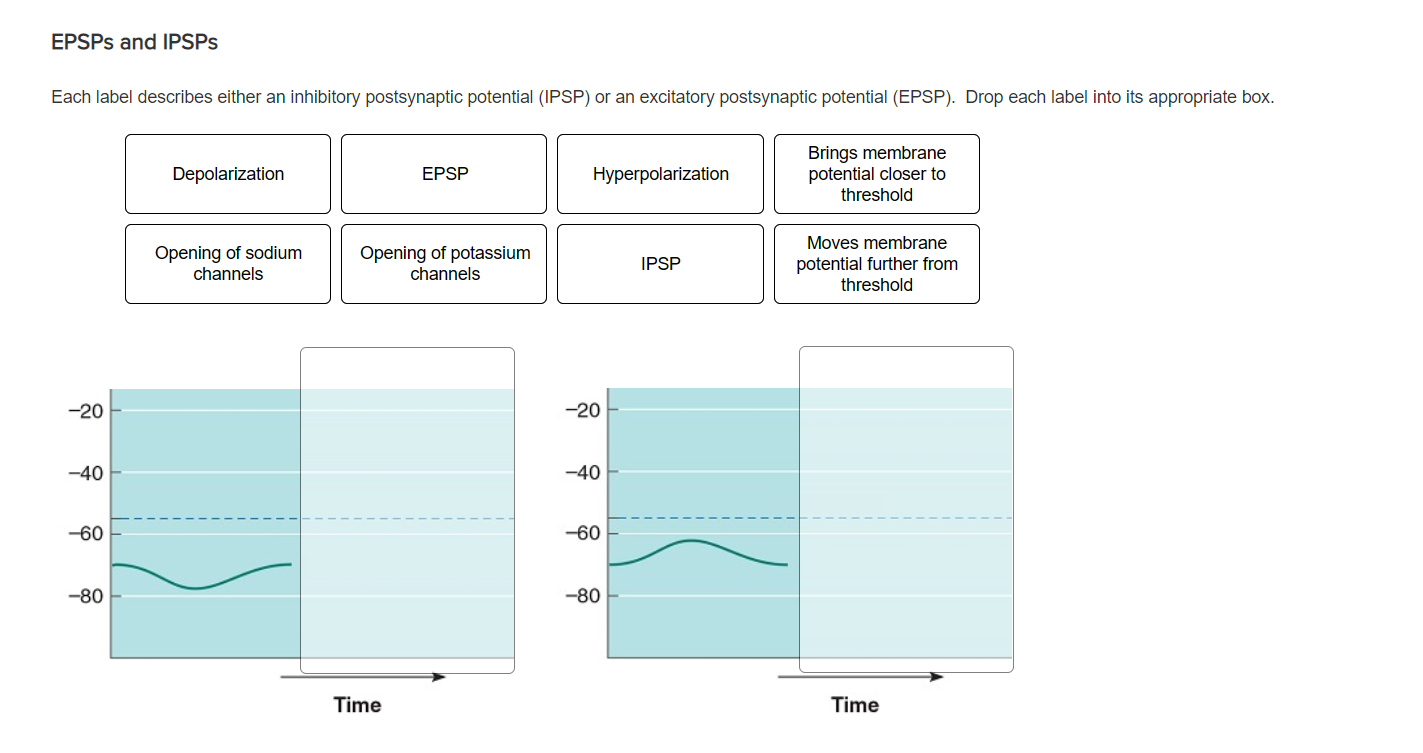
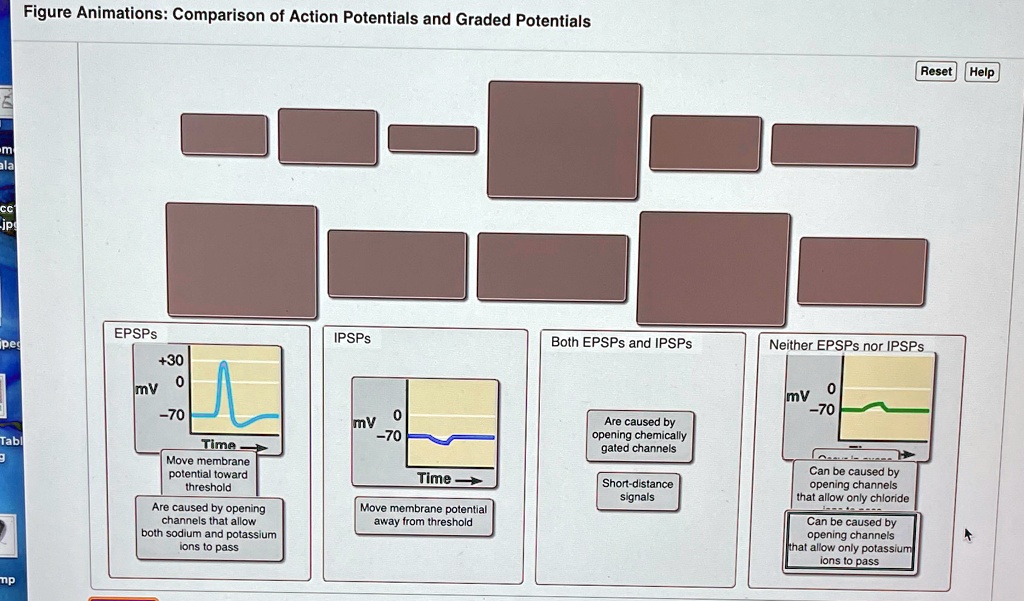
Let's break it down, shall we? Imagine you've just spotted the last slice of your favorite pizza. Your brain is going to send out some excitatory signals, right? These are like a cheerleading squad yelling, "Go, go, go! Grab that pizza!" These signals, scientifically known as EPSPs (Excitatory Postsynaptic Potentials), make the neuron more likely to fire off its own signal. They're like a little nudge towards action.
Now, imagine your friend is reaching for that same slice, and you're thinking, "Wait a minute, I deserve that!" Or maybe your mom is telling you to finish your homework before dessert. In those moments, your brain might be sending out some inhibitory signals. These are the "whoa there!" messages, the brakes on the system. These are called IPSPS (Inhibitory Postsynaptic Potentials), and they make the neuron less likely to fire. They're the voice of reason, or sometimes, just the voice of politeness.
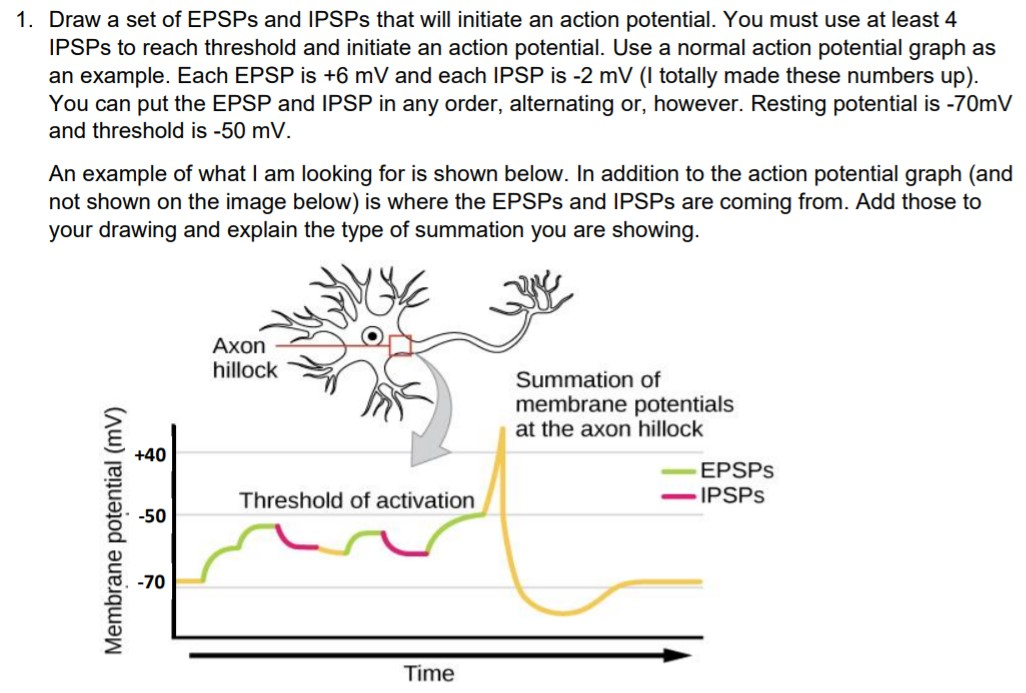
So, you've got all these EPSPs saying "yes!" and all these IPSPs saying "no!" But where do they all go to have their big meeting? Drumroll, please… at the axon hillock! This is the special junction, the decision-making headquarters, where all the incoming signals from other neurons converge. It's like a tiny, super-important boardroom where the fate of the next neuron's electrical "voice" is decided.
Think about it like this: Imagine you're at a party, and you're trying to decide if you should tell that hilarious joke you just heard. Some friends are nudging you forward, saying, "Go on, tell it!" (EPSPs!). Others are giving you a concerned look, thinking, "Maybe not the right audience…" (IPSPS!). All these little influences are adding up, and at some point, you make the decision: "Okay, I'm doing it!" or "Nah, maybe later." Your axon hillock works on a similar principle, but with electrical charges instead of social cues.
The axon hillock is incredibly sensitive. It's where the neuron adds up all the incoming EPSPs and IPSPs. If the sum of these excitatory signals is strong enough to overcome the inhibitory signals and reach a certain threshold, then bam! – the neuron fires off its own electrical signal, an action potential, down its axon to communicate with the next neuron. It's a beautiful, elegant system of summation!
This summation process is what makes our brains so incredibly dynamic and capable. It's how we can process complex information, learn new things, and react to the world around us. Without this ability to weigh and balance different signals, we'd be either constantly buzzing with activity or completely frozen. It's the perfect balance, the sweet spot that allows for nuanced responses.
It's not just about reacting, either. This summation is also fundamental to memory formation, decision-making, and even our emotions. Every thought you have, every feeling you experience, is a result of this intricate dance of excitatory and inhibitory signals being summed up at countless axon hillocks throughout your brain. Pretty mind-blowing, right?
So, next time you're making a quick decision, like whether to grab that second cookie or to finally start that project you've been putting off, take a moment to appreciate the amazing work happening at your axon hillocks. They're the unsung heroes of your neural network, tirelessly working to make sense of it all.
And here's where it gets really fun! Understanding this fundamental principle can actually give you a little insight into how you learn and how you can optimize your own brainpower. When you're trying to learn something new, you're essentially strengthening the excitatory pathways associated with that information. The more you practice and engage with it, the more those EPSPs will become potent, making it easier for your neurons to fire and solidify that knowledge. Conversely, if you want to break a bad habit, you're trying to strengthen those inhibitory pathways, those IPSPs, to tell your brain, "Nope, not this time!"
Isn't it amazing to think that such a fundamental process, happening millions of times a second in your head, is the basis for everything you do? It’s like a secret superpower that you’ve had all along, and now you’re starting to understand how it works! This little peek behind the curtain of neural communication can make everyday experiences feel a little more profound, a little more magical.
So, there you have it! EPSPs and IPSPs summate at the axon hillock. It’s a tiny anatomical landmark with a colossal impact on your entire existence. This isn't just dry biology; it's the engine of your consciousness, the architect of your actions, and the composer of your thoughts.
Don't stop here, though! This is just the tip of the iceberg. The world of neuroscience is brimming with fascinating discoveries that can help you understand yourself and the incredible organ that is your brain. Keep asking questions, keep exploring, and let the wonder of your own mind inspire you to learn even more. Who knows what incredible insights you'll uncover next?


