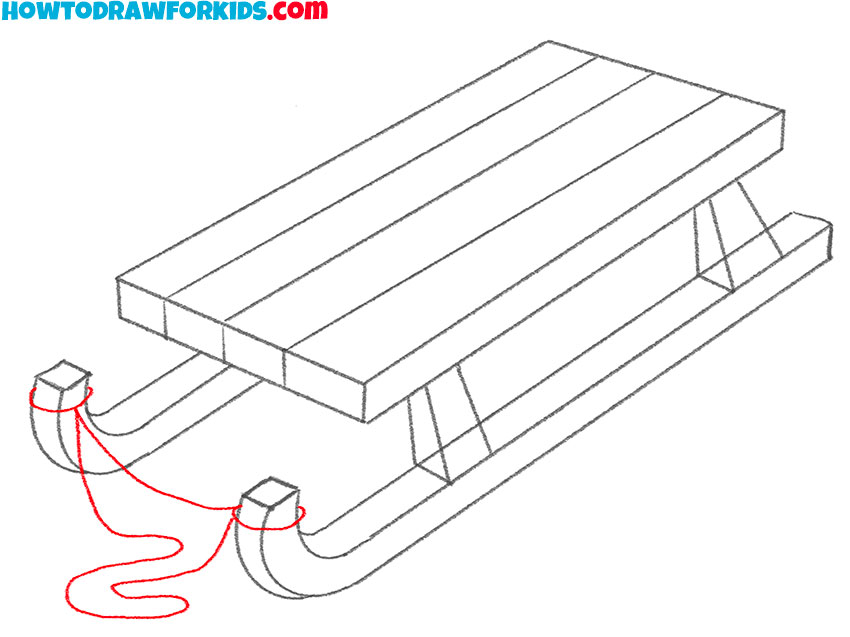
Ever watched kids gleefully zooming down a snowy hill on a sled, the wind whipping through their hair? It looks like pure, unadulterated fun, right? But have you ever stopped to wonder about the invisible forces at play, the silent dance of physics making all that joy happen? Today, we're going to dive into something super cool, something called a force diagram. Don't let the fancy name scare you! Think of it as a secret decoder ring for understanding how things move, and we're going to use it to figure out what's going on with that sled and its happy occupants.
So, what exactly is a force diagram? Imagine you're trying to explain to someone how you push a door open. You don't just say "I push it." You probably point to where you're applying the push, and you might even show the direction. A force diagram is kind of like that, but way more organized and a little bit scientific. It's basically a drawing that shows all the pushes and pulls acting on an object. In our case, that object is our sled, with the kids all snuggled in.
Why is this even interesting, you ask? Well, think about it. Everything we do, from walking to throwing a ball to even just sitting in our chairs, involves forces. Understanding these forces helps us understand why things happen the way they do. It's like peeling back the curtain on the universe and seeing the hidden mechanics. And let's be honest, who doesn't love a good mystery? The mystery of the sled's motion is our adventure today.
The Players on the Snowy Stage
Alright, let's set the scene. We've got our sled, let's say it's a bright red, plastic one. And perched on top are a couple of kids, bundled up in their winter gear, maybe with rosy cheeks from the cold. They're at the top of a nice, gentle slope. Now, what are the main forces we need to consider here? It’s like picking the characters for our story.
First off, there's the force that's always trying to pull everything down towards the center of the Earth: gravity. Yep, that's the same force that keeps your feet on the ground and makes your dropped toast land butter-side down (most of the time!). For our sled and kids, gravity is pulling them straight down. We can represent this as an arrow pointing downwards from the center of the sled-and-kids combination.
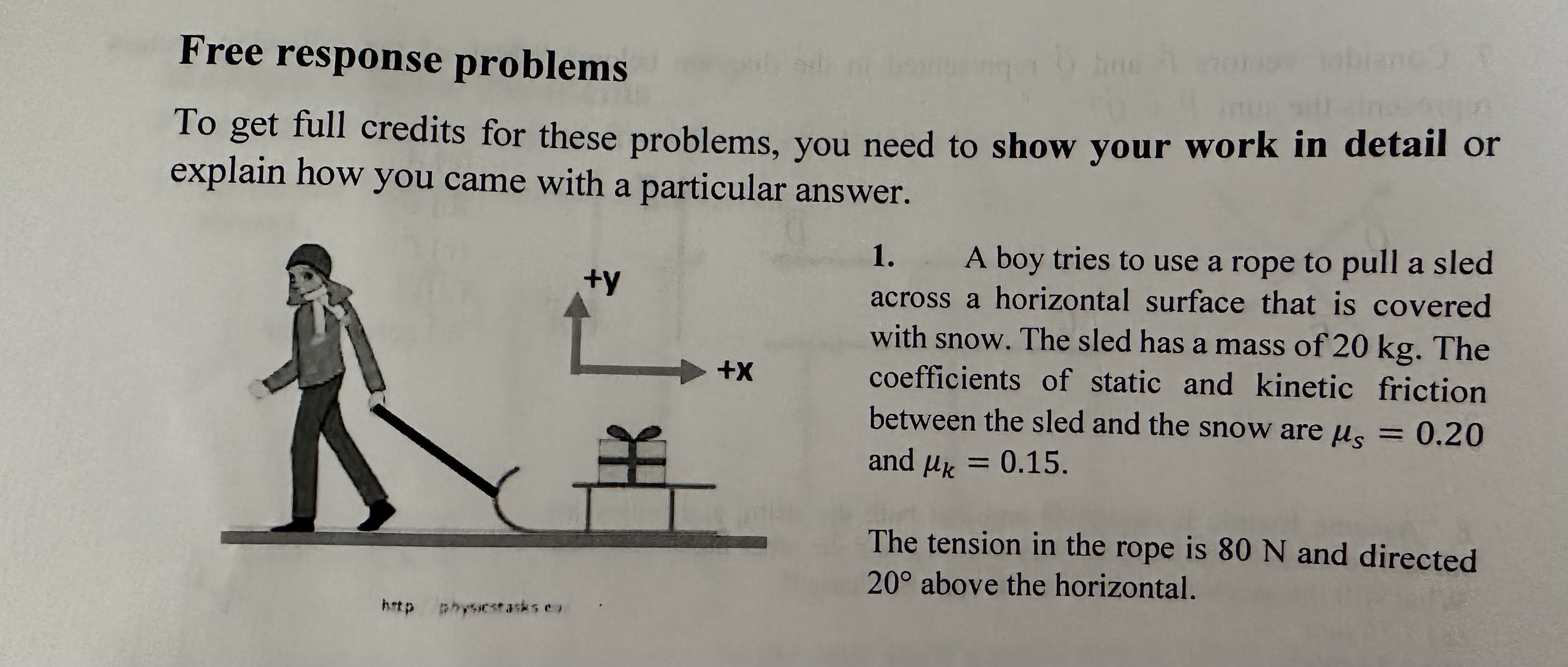
But wait! If gravity was the only thing, wouldn't the sled just fall straight through the snow? Thankfully, no. The snow itself is pushing back. This is called the normal force. It's a bit like when you lean against a wall. The wall pushes back on you, otherwise you'd just go through it! The normal force acts perpendicular (that's a fancy word for "at a right angle") to the surface. So, on our snowy hill, the normal force will be pushing upwards, away from the snow. It's like the snow saying, "Nope, you're not sinking any further!"
The Force that Makes it Happen: Gravity vs. the Slope
Now, here's where the fun really begins. Gravity is pulling the sled straight down. But the hill is at an angle, right? This means gravity doesn't get to act directly against the snow. Think of it like trying to slide a heavy box across a floor. If the floor is flat, gravity is pushing straight down, and the floor's normal force is pushing straight up. But if you put that box on a ramp, gravity is still pulling it straight down, but now it's also trying to pull it along the ramp. See the difference?
So, the force of gravity, which we initially drew pointing straight down, can be broken down into two parts. One part is still pushing straight down (and is countered by the normal force of the snow). The other part is the one that's important for getting the sled moving: the part of gravity that’s pulling the sled down the slope. This is the component of gravity acting along the incline. This is the force that gives the kids that exciting rush of speed!
Imagine you have a toy car and you tilt the table it's on. The car will roll down. Gravity is still pulling it down, but it's the tilt that allows that downward pull to also create a sideways motion. It's the same idea with our sled. The steeper the hill, the bigger this component of gravity is, and the faster the sled will go. Makes sense, right?
The Sneaky Force: Friction
But hold on, it's not just about gravity pushing the sled down. There's another force at play, a bit of a party pooper, but also a really important one: friction. Friction is the force that opposes motion. It's what happens when two surfaces rub against each other. Think about rubbing your hands together really fast – they get warm, right? That's friction!
In our sled scenario, we have friction between the bottom of the sled and the snow. This friction is always trying to slow the sled down. It's like a gentle hand trying to hold it back. The amount of friction depends on a few things, like how rough the sled's bottom is, how rough the snow is, and how much the sled is being pressed into the snow (which is related to gravity and the normal force).
![How To Draw Sled Step by Step - [9 Easy Phase] - [Emoji]](https://easydrawings.net/wp-content/uploads/2022/06/How-to-draw-sled-step-3.png)
So, we'll draw an arrow representing friction pointing in the opposite direction of motion. If the sled is moving down the hill, friction is pushing it up the hill. It’s like a constant tug-of-war between the force of gravity pulling it down and friction trying to hold it back. The net effect of these forces determines how quickly the sled accelerates.
Putting it All Together: The Force Diagram Revealed!
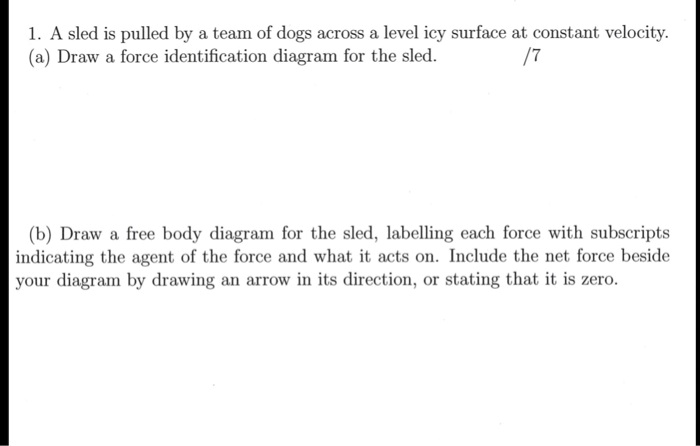
So, let's visualize our force diagram. We draw a simple dot or a box to represent the sled and kids. Then, from that dot, we draw arrows:
- One arrow pointing straight down (gravity).
- One arrow pointing upwards and perpendicular to the slope (the normal force from the snow).
- One arrow pointing down the slope (the component of gravity that causes motion).
- One arrow pointing up the slope (friction, opposing motion).
It's like a little constellation of forces, each with its own job. And the way these arrows interact is what makes the sled slide. If the arrow pointing down the slope (gravity's pull) is bigger than the arrow pointing up the slope (friction), the sled will move! If they were equal, the sled would just slide at a constant speed. If friction was stronger, the sled would slow down or even stop.
![How To Draw Sled Step by Step - [9 Easy Phase] - [Emoji]](https://easydrawings.net/wp-content/uploads/2022/06/How-to-draw-sled-step-4.png)
What's really neat is that we can actually calculate how fast the sled will go if we know the strength of these forces. This is where physics gets really powerful. It allows us to predict things! We can think about how changing the slope, or using a different kind of sled, or even adding more kids, would affect the forces and therefore the motion.
Why This is More Than Just a Drawing
This isn't just about drawing arrows. It's about understanding the fundamental principles that govern our world. Every time you see something move, whether it's a car, a bird, or a falling leaf, forces are at work. Learning to draw a force diagram is like learning a new language – the language of motion. It opens up a whole new way of looking at the world around you.
So, the next time you see kids having a blast on a sled, you can have a little secret smile. You'll know that behind all that laughter and exhilaration, there’s a beautiful ballet of forces, a silent, invisible tug-of-war that’s perfectly orchestrated by the laws of physics. It's pretty cool to think that even something as simple as sledding can be a miniature science lesson, right? It’s a reminder that the world is full of fascinating things to discover, if we just take a moment to look closer and ask "why?"