Hey there, science curious folks! Ever find yourself staring at a bag of chips, maybe a bottle of something bubbly, and ponder the tiny, invisible building blocks that make it all happen? Yeah, me neither, usually. But stick with me, because today we're diving into the wonderfully weird world of molecules, specifically two very similar-sounding dudes: but-1-ene and but-2-ene. Think of them like cousins who look almost identical but have totally different vibes. You know the type – one’s always up for a wild party, the other prefers a quiet night with a good book. That’s basically our alkenes here.
So, what’s the big deal? It all comes down to a little thing called a double bond. Now, imagine carbon atoms as tiny LEGO bricks, right? They love to snap together. When they snap together with a single bond, that’s like a standard, reliable connection. They’re happy, they’re stable, they don’t cause much fuss. But sometimes, two carbon atoms decide to get really close, like super-glued close. That’s when they form a double bond. It’s like they’re holding hands and giving each other a big ol’ hug. This double bond is the party starter, the special feature that makes these molecules… well, different.
Now, let's meet our stars. We've got but-1-ene. The name itself tells you a story. "But" means there are four carbon atoms in a row. Simple enough, right? Like a little chain of four LEGOs. The "-ene" part is our signal that we've got that exciting double bond. And the "1"? That's the crucial bit. It tells us exactly where this double bond is hanging out. In but-1-ene, the double bond is between the first and second carbon atoms.
Imagine those four carbon atoms lined up: C-C-C-C. In but-1-ene, it looks like this: C=C-C-C. See that double line? That's the party happening right at the beginning of the chain. It's like the DJ booth is set up at the entrance of the club, ready to blast the music from the get-go. This double bond is a bit more… accessible, you could say. It's out there, practically begging to react with things. Think of it as the outgoing, energetic one in the family who’s always the first to try a new dance move.
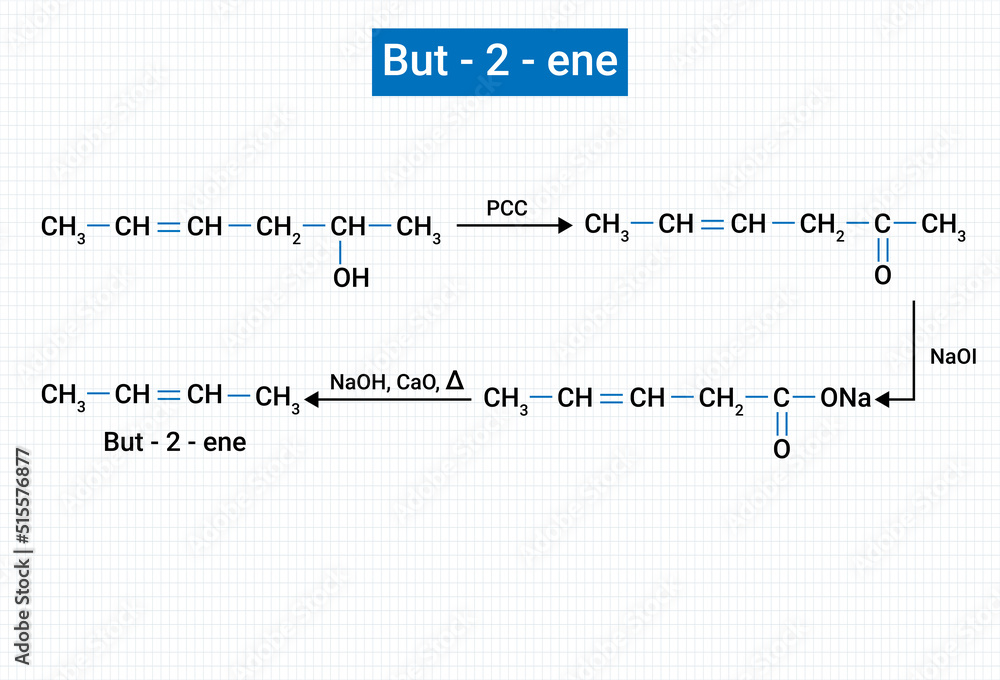
Now, let’s meet its nearly identical twin, but-2-ene. Again, "but" means four carbons. "-ene" means a double bond. But here’s the twist: the "2". This "2" tells us that the double bond is located between the second and third carbon atoms. So, instead of C=C-C-C, but-2-ene looks like C-C=C-C.
This is where the subtle magic happens. The double bond in but-2-ene is smack-dab in the middle of the molecule. It’s not at the edge, shouting for attention. It’s more like the sophisticated attendee at the party who’s enjoying the conversation, but isn’t necessarily the life of the absolute center of the dance floor. It's still got that reactive double bond, but its position changes how it interacts with the world. It’s like the slightly more reserved cousin who’s still fun, but maybe prefers to be in the conversation circle rather than the mosh pit.
So, what does this mean in the grand scheme of things? Why should you care if a double bond is at position 1 or position 2? Well, it’s all about how these molecules behave. Think about it like this: you have two identical twins, but one has a really loud, sparkly shirt on, and the other has a more subdued, elegant one. They’re still the same person underneath, but their presentation makes a difference in how they’re perceived and how they might react in different social situations.
The double bond, wherever it is, is the site of potential action. It’s where chemical reactions love to happen. It's like a magnet for other molecules that want to join the party. But the location of that double bond can influence how easily and how specifically those reactions occur. It’s like trying to grab a hand. If the hands are right in front of you, it’s super easy. If they’re a bit further away, or surrounded by other people, it might take a little more effort or a different approach.
In but-1-ene, that double bond at the end is like a readily available handshake. It's often more reactive in certain types of reactions because it's less hindered. Imagine trying to walk through a crowded room. If the exit is right next to you, you can dash out. If you have to navigate through a dense cluster of people first, it's a bit more of a journey.
But-2-ene, with its double bond in the middle, is like a handshake that’s already in the middle of a conversation. It’s still a handshake, still a double bond, but the surrounding carbon atoms might influence the approach of the molecule trying to react with it. It’s like it’s got a couple of buddies on either side, giving it a bit more… structural context.
This difference in reactivity might seem minuscule, but in the vast world of chemistry, it can lead to very different outcomes. It’s like the difference between a carefully orchestrated symphony and a lively jazz improvisation. Both have music, but the structure and flow are distinct.
For example, when these alkenes undergo reactions like hydrogenation (where you add hydrogen to the double bond), the products can be influenced by the starting material. Hydrogenation essentially "saturates" the double bond, turning it into a single bond and making the molecule more stable, like turning a vibrant party into a chill hangout. But how that hydrogen gets added can sometimes be a bit particular about where that double bond started.
Think of adding hydrogen like trying to give someone a high-five. If the hands are outstretched and readily available (but-1-ene), it’s a quick, enthusiastic slap. If the hands are a bit closer in, or angled differently (but-2-ene), the high-five might be more of a gentle tap. The result is still a high-five, but the execution can vary!
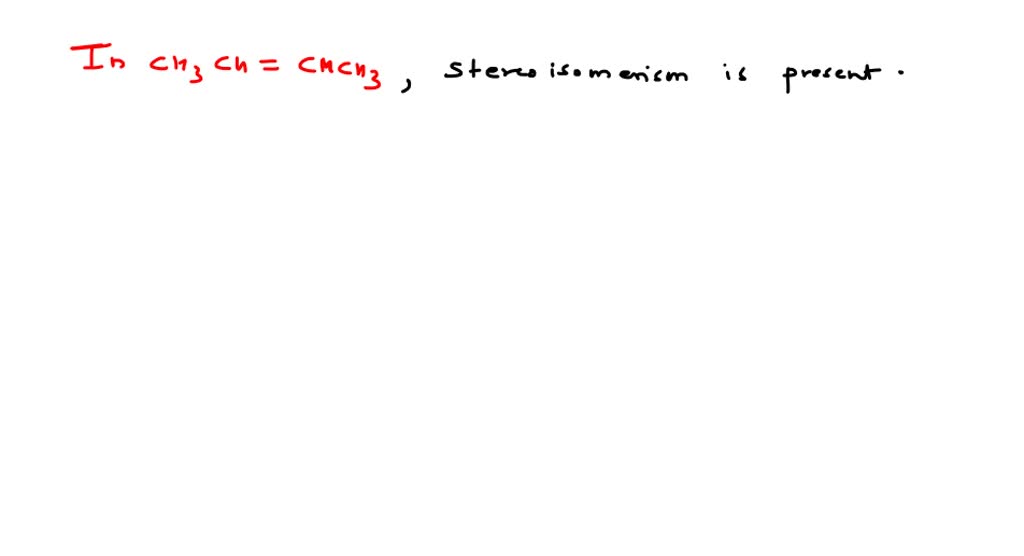
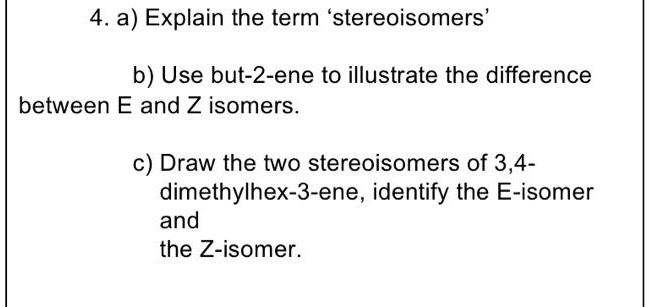
Another interesting difference arises from the fact that but-2-ene itself can exist in two forms. This is where things get really trippy, like discovering your identical twin has a secret identical twin. Because the double bond in but-2-ene is in the middle, the groups attached to the carbons can be arranged in different ways. We're talking about cis-but-2-ene and trans-but-2-ene.
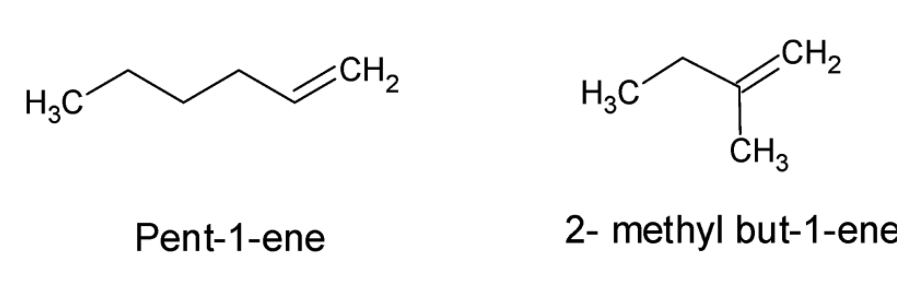
In cis-but-2-ene, the two groups attached to the double bond (which are hydrogen atoms and methyl groups, by the way) are on the same side of the double bond. Imagine two people holding hands and facing the same direction. They’re close, cozy, and kind of occupying the same general space. This arrangement can lead to slightly different physical properties, like boiling point, because these molecules are just a little bit more… clumped together.
In trans-but-2-ene, however, these groups are on *opposite sides of the double bond. It’s like two people facing away from each other, holding hands across a small gap. This makes the molecule more spread out, more linear, and less inclined to pack tightly with its buddies. So, trans-but-2-ene has a slightly lower boiling point because its molecules don’t have to work as hard to break free from each other. It's like trying to get a bunch of people to move out of a small room versus a large hall – the small room is a tighter squeeze.
But-1-ene doesn't have this cis-trans isomerism because the double bond is at the end, and there are two identical groups (two hydrogen atoms) on one of the double-bonded carbons. You can't be on the "same side" or "opposite side" if there are two identical things. It’s like trying to arrange two identical hats on a stick – there's really only one way to put them on.
So, while both but-1-ene and but-2-ene are alkenes with four carbons and a double bond, their story is a bit like the difference between a perfectly straight road (but-1-ene, with its accessible double bond) and a slightly winding country lane (but-2-ene, with its double bond in the middle and the potential for different turns and twists). Both get you to your destination, but the journey and the scenery can be quite different.
Why does this matter beyond the lab? Well, these simple alkenes are building blocks for so many things we use every day. They're used in the production of plastics, solvents, and even pharmaceuticals. The precise structure, the exact placement of that double bond, can influence the properties of the final product. Imagine trying to build a house. Using the right kind of beam, in the right place, makes all the difference between a sturdy home and… well, something less ideal. A wobbly structure, perhaps?
Think of it like choosing an ingredient for a recipe. You might have two similar types of flour, but one is all-purpose, and the other is self-rising. You can technically bake with both, but the texture and rise of your cake will be wildly different. That tiny difference in formulation (the placement of the double bond!) leads to a totally different culinary experience.
Even in the realm of fuels, the specific structure of hydrocarbons matters. While these particular butenes aren't primary fuel components in the way larger alkanes are, understanding their properties helps chemists design better fuels and understand how fuels burn. It’s all about optimizing performance, and that optimization often starts with the tiniest details of molecular structure.
So, next time you see a chemical formula, or hear a name that sounds vaguely scientific, remember our cousins, but-1-ene and but-2-ene. They're a great reminder that even the smallest differences in arrangement can lead to a whole world of distinct characteristics. They’re not just random letters and numbers; they’re tiny molecular personalities, each with their own unique story to tell. And that, my friends, is pretty darn cool, wouldn't you agree? It’s like finding out that your favorite celebrity has an almost identical, but secretly different, long-lost twin. You just never know what fascinating twists and turns life (or chemistry) will throw at you!