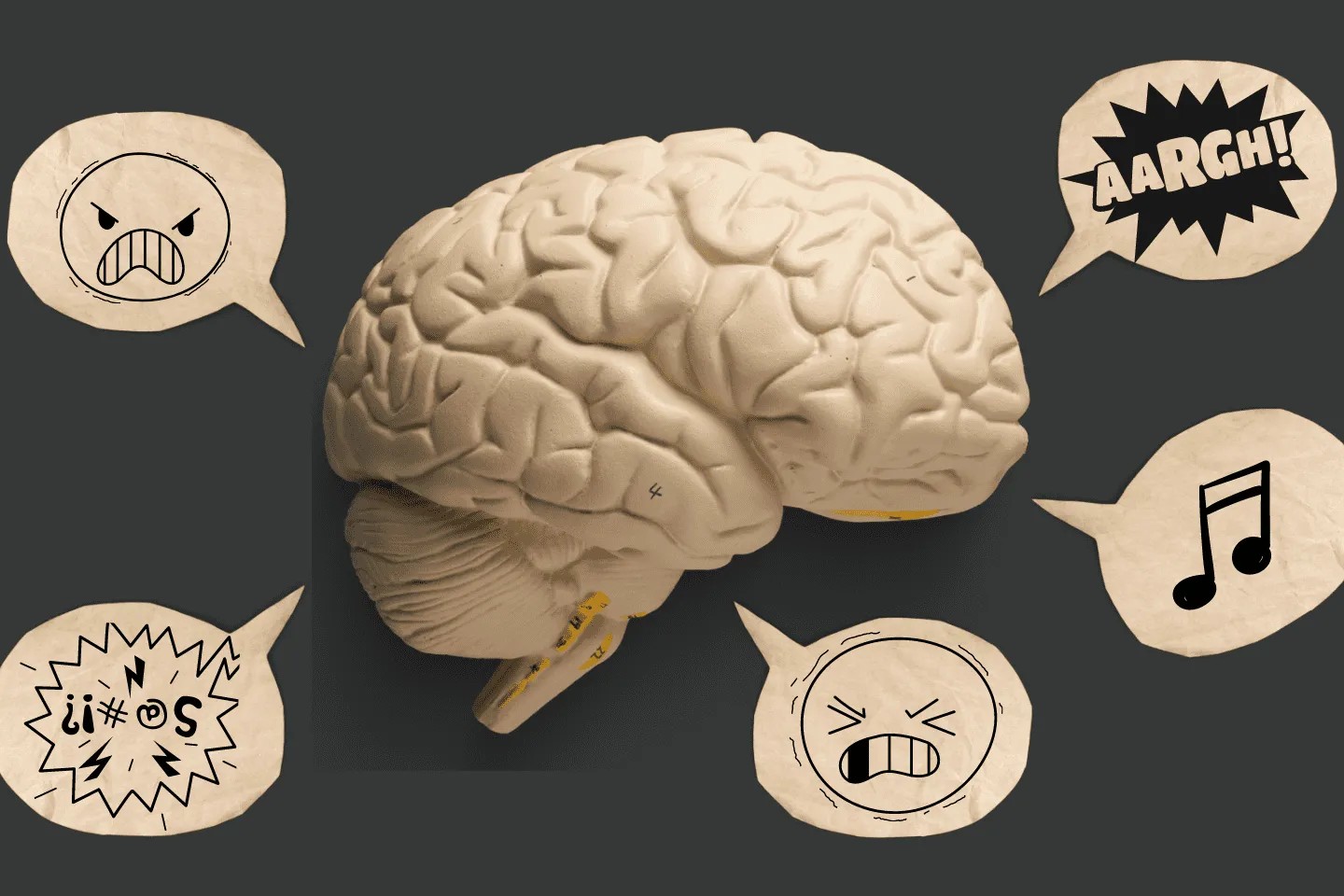
Remember that moment? The one that probably made you do a double-take, perhaps even a mild internal groan, as John Davidson, during the BAFTA ceremony, unleashed a string of… well, let's just say colourful language? It was a shocker, for sure. But before we all collectively tut-tut or chuckle, there's a bit more to the story than just a guy having a bad moment on the red carpet. It turns out, there's some fascinating science – and a touch of pop culture history – behind why someone might suddenly blurt out things they probably shouldn't.
The term that's been buzzing around is coprolalia. It sounds a bit like a medieval plague, doesn't it? But in reality, it's a fascinating, and often misunderstood, neurological condition. Think of it as an involuntary vocal tic, but instead of a cough or a throat-clearing sound, it's the sudden, uncontrollable urge to utter obscenities or socially inappropriate words and phrases.
So, what exactly is going on in the brain to make this happen? Well, it’s primarily linked to a condition called Tourette syndrome. Now, when most people hear "Tourette's," they might picture someone uncontrollably shouting "Allahu Akbar!" or "Schweinsteiger!" – thanks, in part, to how it’s sometimes portrayed in movies and TV shows. While those can be tics, the reality is much more varied. Tourette's is a complex neurological disorder characterized by a combination of involuntary movements (motor tics) and vocalizations (vocal tics).
Coprolalia is considered one of the more dramatic and more socially stigmatizing vocal tics associated with Tourette's, but it’s actually not as common as you might think. Estimates vary, but it’s believed to affect only about 10-15% of individuals with Tourette syndrome. So, for the vast majority of people with Tourette's, coprolalia isn't part of their experience.
The Brain Under the Hood
To get a slightly more technical, but still chill, understanding, let's peek under the hood. The leading theory points to differences in the brain's basal ganglia. This is a group of structures deep within the brain that are crucial for controlling motor movements, habits, and – importantly – regulating involuntary actions. In people with Tourette's, there seems to be a disruption in the communication pathways within these areas, leading to the sudden, unbidden urges and movements we recognize as tics.
Think of it like a faulty circuit breaker. The signals that normally keep these urges in check get a bit scrambled. It’s not a conscious choice, it’s not a desire to offend, and it’s certainly not a reflection of their personality or moral compass. It's an involuntary outburst, akin to someone with a different kind of tic suddenly blinking rapidly or shrugging their shoulders without meaning to.

The exact reasons for these differences are still being researched, but genetics and neurochemical imbalances (particularly with dopamine) are thought to play significant roles. It's a complex interplay, and the scientific community is constantly unravelling more about it.
Coprolalia in the Cultural Spotlight
While John Davidson's BAFTA moment brought coprolalia into the public eye, it's not the first time the condition has been discussed, albeit sometimes controversially. Remember the character of "Crazy" Joe Davola in the classic sitcom Seinfeld? He was depicted with Tourette's and coprolalia, which, at the time, sparked debate about the ethics of using such a condition for comedic effect. While often played for laughs, it did, in its own way, introduce the concept to a wider audience, even if it was a somewhat sensationalized version.
Then there's the film "The United States of Leland," which explored the complexities of Tourette's and coprolalia through its protagonist. These cultural touchstones, while fictional, have helped to move the conversation from a place of pure shock to one that, at least for some, involves a degree of understanding and empathy. It's a slow burn, but cultural representations, even flawed ones, can spark curiosity and encourage people to learn more.

It’s a reminder that what we see on screen isn’t always the full picture. The reality of Tourette's and coprolalia is far more nuanced and personal than what's often portrayed for dramatic effect.
The 'Curse' of the Unbidden Word
For individuals who experience coprolalia, it can be incredibly challenging. Imagine being in a job interview, a wedding, or a quiet library, and suddenly having the uncontrollable urge to shout something that would make your grandmother blush. The social pressure and the potential for judgment can be immense.
Many people with Tourette's, including those with coprolalia, develop strategies to manage their tics. These can include:

- Awareness and Acknowledgement: Simply understanding that it's a part of their condition can be the first step.
- Pre-emptive Gestures: Sometimes, a subtle gesture or a cough can help to "redirect" or release the build-up of tic energy before it manifests as a full-blown vocalization.
- Talking it Out (Carefully): For some, being able to calmly explain their condition to trusted individuals can alleviate pressure. This is obviously more difficult in unexpected public moments.
- Therapies: Behavioral therapies, such as Habit Reversal Training (HRT) and Exposure and Response Prevention (ERP), can be effective in helping individuals manage and reduce the intensity and frequency of their tics.
- Medication: In some cases, medication can be prescribed to help manage the severity of tics, although it's not a cure and can come with its own side effects.
It's not about "stopping" the tic entirely, which is often not possible. It's more about learning to live with it and minimize its impact on daily life. Think of it like managing any chronic condition – it requires a toolkit of strategies and a lot of self-compassion.
Fun Facts and Fascinating Nuances
Here are a few tidbits to chew on, just for fun:
- Not Always Obscenities: While the most famous examples involve swear words, coprolalia can also involve other socially inappropriate words, animal noises, or even seemingly random sounds. The key is the involuntary and socially inappropriate nature.
- The Tic-Suppressing "Sacrifice": Many people with Tourette's describe a build-up of "premonitory urges" – a sensation that precedes a tic. They often feel a need to perform the tic to relieve this uncomfortable urge. It's like an itch that has to be scratched.
- The "Tourette's Trifecta": While coprolalia is a vocal tic, Tourette's also encompasses motor tics. A person might have a blinking tic, a shoulder-shrugging tic, and a vocal tic like coprolalia.
- Famous Figures (Rumored or Confirmed): While not always publicly disclosed, there's speculation and some confirmed cases of historical figures and modern celebrities who have lived with Tourette syndrome and its various tics. This can be empowering for others to know they aren't alone.
- It's Not Contagious: This might seem obvious, but in moments of public shock, the impulse to think something is "catching" can arise. It's a neurological condition, not an infection!
Beyond the BAFTA Blunder: A Broader Perspective
John Davidson's moment at the BAFTAs, while momentarily jarring, serves as a potent reminder of the invisible battles many people fight every day. It highlights the importance of understanding and empathy in a world that can often be quick to judge.

It’s easy to react with surprise or even amusement when something unexpected like this happens. But the underlying science, the reality of living with a neurological condition like Tourette syndrome, is far more complex and often challenging. The ability to shout offensive words isn't a choice; it's a symptom, a manifestation of intricate brain wiring.
In our daily lives, this translates to a simple but powerful lesson: assume kindness and curiosity, not judgment. When we encounter behaviour that seems unusual or unexpected, instead of jumping to conclusions, we can take a breath and consider that there might be a story, a scientific explanation, or a personal struggle that we know nothing about.
The next time you see something that makes you raise an eyebrow, whether it's a public figure’s unexpected outburst or a stranger's quirky habit, remember coprolalia. Remember that our brains are intricate, beautiful, and sometimes unpredictable machines. And that a little bit of understanding can go a long, long way in making our world a more inclusive and compassionate place for everyone.