
Imagine a single cell, a tiny, bustling city all by itself. It's done all its hard work, grown nice and plump, and now it's ready for a major life event: becoming two! This incredible transformation, this act of cellular reproduction, is where things get really exciting. When animal cells decide it's time to split, they don't just rip themselves in half. Oh no, that would be far too messy and, frankly, a bit undignified for such sophisticated little units.
Instead, they perform a delicate and absolutely fascinating dance known as cytokinesis. Think of it like a meticulously planned party where everyone knows their role and the music is just right. It's not just about getting the job done; it's about doing it with flair and precision. This isn't some accidental tearing; it's a carefully orchestrated finale to a cell's growth cycle.
So, what's the secret sauce behind this cellular division? How do these microscopic marvels achieve such a clean break? Well, it all starts with a special kind of structure that begins to form around the middle of the cell. It's like the cell is creating a subtle, invisible rubber band, or perhaps a tiny, internal drawstring. This isn't a permanent fixture; it's a temporary tool designed for a very specific purpose.
This ingenious mechanism involves a protein called actin. You might have heard of actin before; it's a pretty big deal in our own bodies, helping our muscles contract and our cells move. In the context of cytokinesis, actin gets together with another protein friend, myosin. Together, they form a dynamic ring, a bit like a microscopic hula hoop, right around the equator of the dividing cell. This is the contractile ring, and it’s the star of the show.
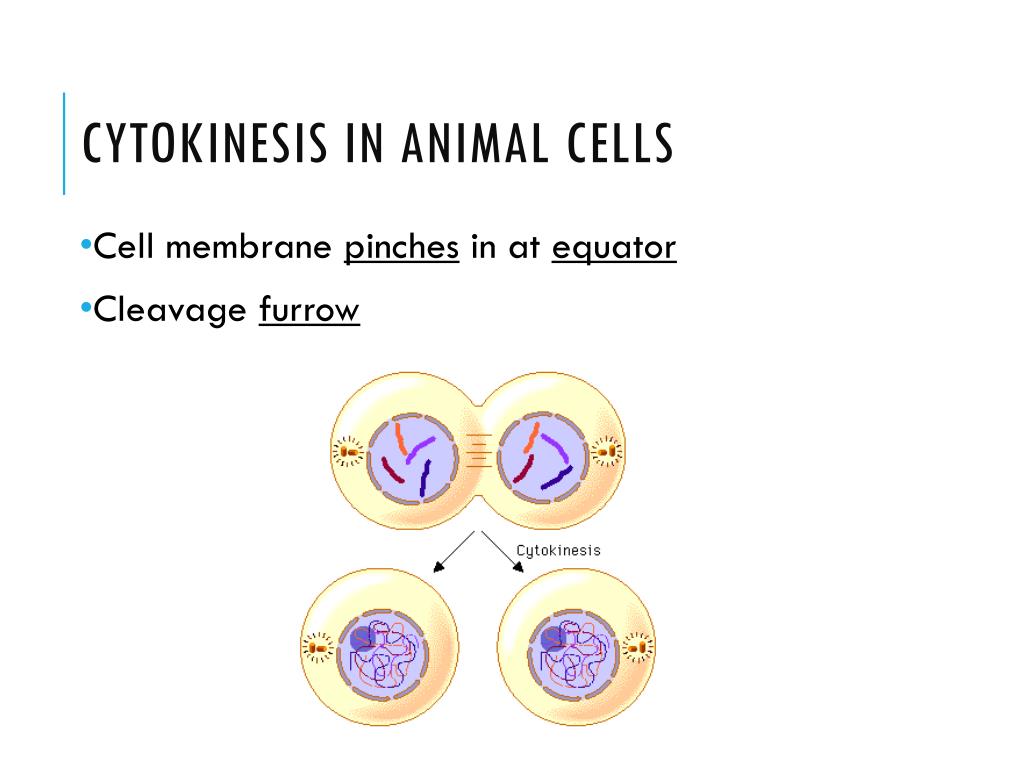
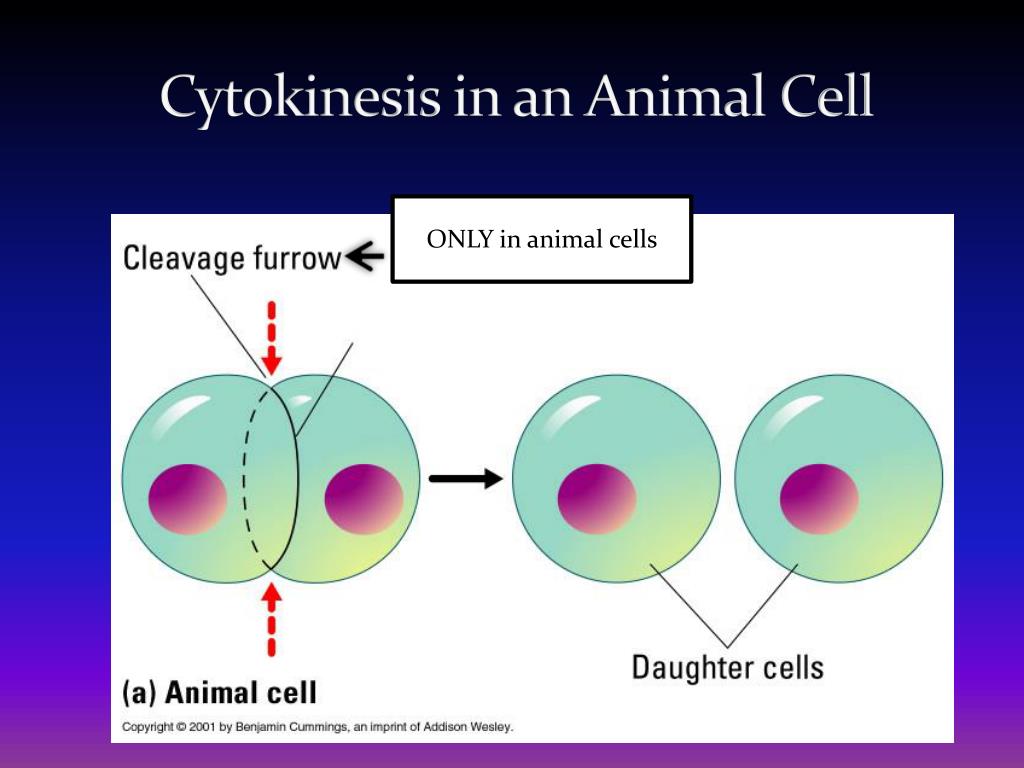
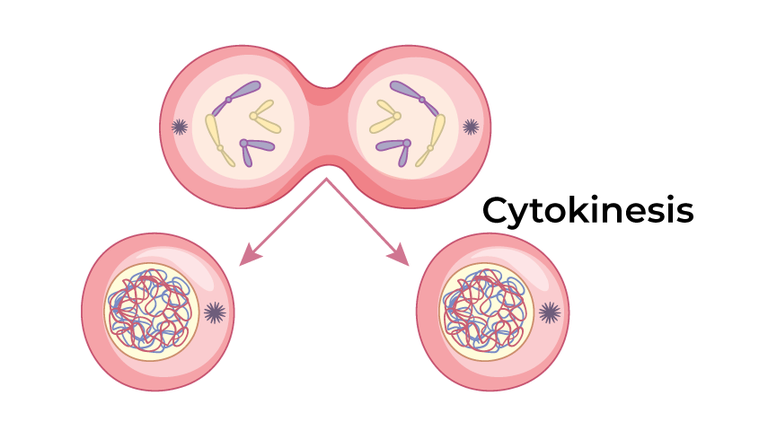
As the cell prepares to divide, this contractile ring tightens. It’s like a tiny, incredibly strong hand is gently squeezing the cell in the middle. This squeezing action creates a noticeable indentation, a kind of pinching effect. You can actually see this happening under a microscope, and it’s absolutely mesmerizing. The cell starts to look like it's being cinched in by a beautiful, invisible belt. This indentation is called a cleavage furrow, and it’s the visible sign that cytokinesis is in full swing.

The contractile ring, made of actin and myosin, continues to contract, gradually deepening the cleavage furrow. It’s a steady, relentless process, but it’s also incredibly graceful. The ring gets smaller and smaller, pulling the cell membrane inward from all sides. Imagine a balloon being gently squeezed in the middle until it’s about to pop into two smaller balloons. That's the essence of it, but with a biological twist!
What makes this process so special is its adaptability. The cell isn't just following a rigid set of instructions. It's constantly sensing its environment and adjusting. The contractile ring knows exactly where to form, ensuring that the division is as even as possible, so both new cells get their fair share of cellular machinery. It’s a remarkable feat of biological engineering.
Think about it: this entire process happens within the incredibly small confines of a cell. There’s no scaffolding, no external tools. Everything needed is generated from within. The actin and myosin proteins assemble themselves into this powerful ring, and they work in perfect concert to achieve the division. It’s a testament to the elegance and efficiency of life at its most fundamental level.
As the cleavage furrow deepens, the cell’s cytoplasm, its internal goo, is meticulously divided. Crucial components like the nucleus, which holds the cell’s DNA instructions, and other organelles, the cell's mini-organs, are carefully partitioned. The goal is to ensure that each new daughter cell is a fully functional entity, ready to start its own life and, eventually, embark on its own journey of growth and division.
Finally, with one last determined squeeze, the contractile ring completes its job. The cell membrane fuses at the narrowest point, and what was once a single entity is now two distinct, independent cells. They are, for all intents and purposes, twins, each carrying a complete set of genetic material and the necessary tools to thrive. It’s a moment of cellular liberation and renewal.
This entire process, from the initial assembly of the contractile ring to the final separation, is a masterclass in biological coordination. It’s a reminder that even the smallest components of life are capable of extraordinary feats when they work together.
What makes cytokinesis particularly entertaining to observe is its visual progression. You can literally watch the cell change shape, from a plump sphere to a dumbbell-like structure, and finally to two distinct entities. It’s a dynamic transformation, a miniature drama unfolding right before your eyes. For anyone fascinated by the inner workings of life, observing cytokinesis is like getting a backstage pass to one of nature's most fundamental and beautiful processes.
So, the next time you think about cells, remember that they don't just passively divide. They actively engage in a remarkable performance, a synchronized dance of proteins, all orchestrated by the incredible machinery within. The humble yet powerful contractile ring, powered by actin and myosin, is the unsung hero of this cellular splitting, ensuring that life, in its infinite variety, can continue to flourish, one division at a time.
It’s a process that happens countless times every second in our own bodies, a constant renewal happening at the microscopic level. From healing a tiny cut to growing a whole new organism, cytokinesis is at the heart of it all. And the way animal cells achieve it, through that elegant pinching motion driven by a dynamic ring, is nothing short of a biological masterpiece.
It’s a visual spectacle that showcases the amazing capabilities of life. The way the cell membrane indents, guided by the internal contractile force, is truly captivating. It’s a testament to the precise engineering that goes into every single living thing, from the simplest single-celled organism to complex creatures like ourselves. This isn't just cell division; it's a tiny, beautiful ballet of biological creation.
The simplicity of the core mechanism – a tightening ring – belies its profound importance. It’s a reminder that sometimes, the most elegant solutions are the simplest ones. And watching this process unfold, you can't help but feel a sense of wonder at the intricate, self-organizing power of biology. It makes you want to look closer, to learn more, and to appreciate the incredible world happening within and around us.


