Hey there, word wizards and grammar goofballs! Let's talk about something that sounds super dry but is actually a total blast: adverbs. And I’m not talking about the usual "they modify verbs" stuff. Oh no. We're diving into a little linguistic mystery. So, the big question on everyone's lips, probably right after "what's for dinner?" is: Adverbs modify nouns and pronouns. True or False?
Strap in, because we're about to unravel this one. And spoiler alert: it’s more fun than you think. Think of it like a linguistic detective mission. We’ve got our magnifying glass, our deerstalker hat, and a whole lot of enthusiasm. Who’s with me?
The Shocking Truth (Maybe!)
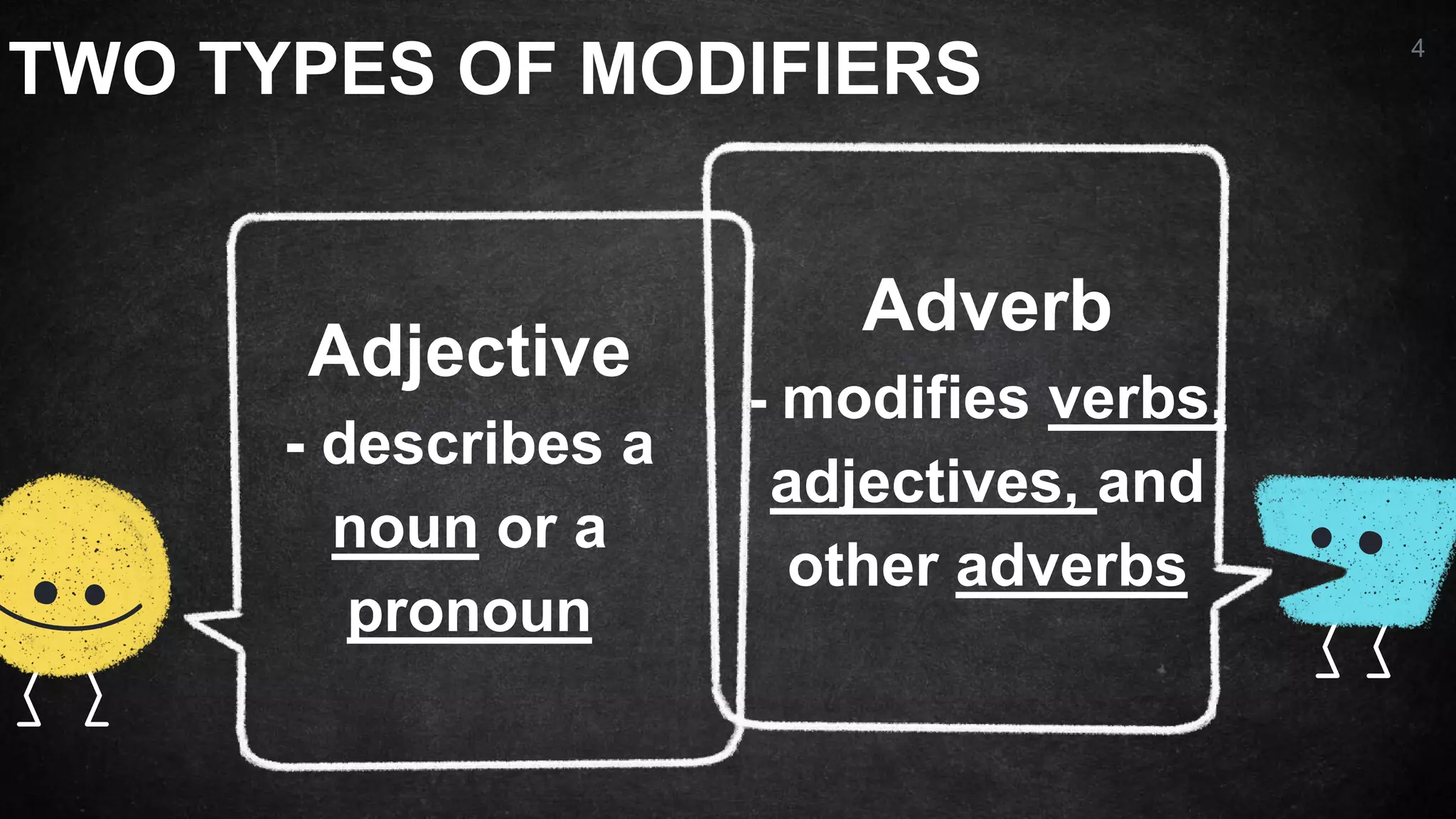
Alright, let’s get straight to it. The statement "Adverbs modify nouns and pronouns" is... drumroll please... FALSE!
Whoa. Did you see that coming? Probably not! Most of us learn that adverbs are the trusty sidekicks of verbs. They tell us how, when, where, or to what extent something is happening. Like, "He ran quickly." Quickly tells us how he ran. Simple, right?
But what about nouns and pronouns? That’s where things get a little more… spicy. And by spicy, I mean, where the fun starts. Let's break down why this statement is a big fat NOPE. And then, we'll explore the weird corners where adverbs sometimes seem to hang out with nouns and pronouns. Because language, my friends, is never that simple. It's wonderfully, hilariously messy.
Adverbs: The Verb's Best Friend
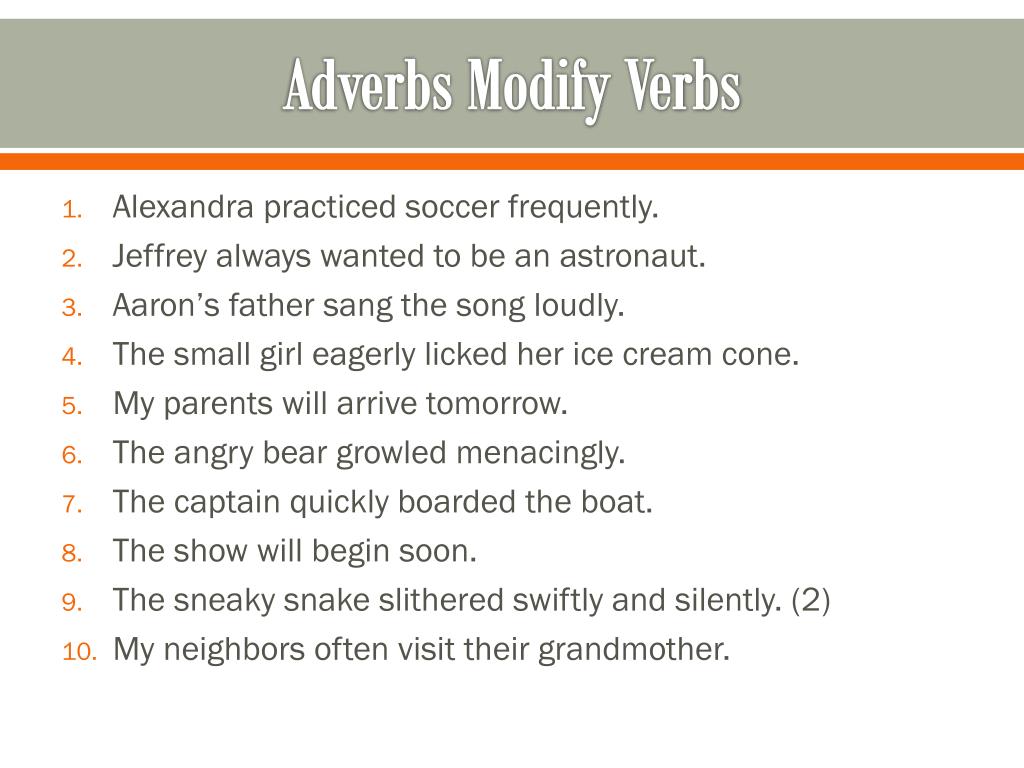
Let's solidify the basics. Adverbs are like the super-fans of verbs. They just can't get enough of telling us more about them.
"She sang beautifully." How did she sing? Beautifully.
"They arrived yesterday." When did they arrive? Yesterday.
"He looked everywhere." Where did he look? Everywhere.

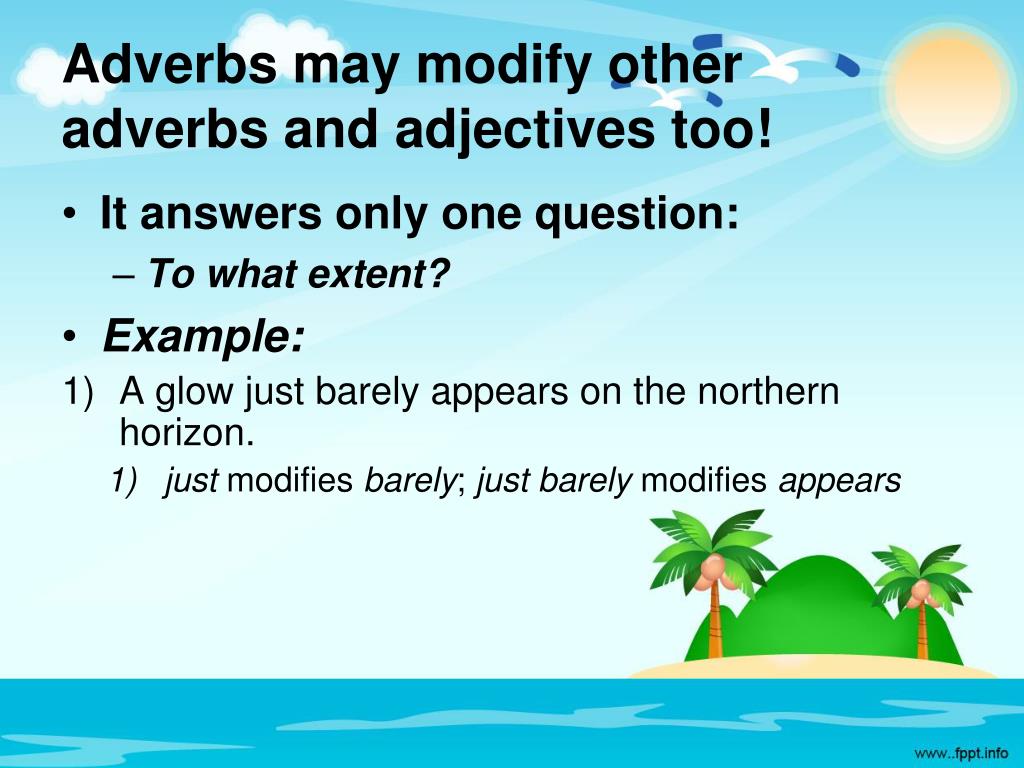
"It was extremely cold." To what extent was it cold? Extremely.
See? They're all about the action, the verb. They paint a more vivid picture. They add that extra oomph. Without adverbs, our sentences would be a bit… bland. Like plain toast. Adverbs are the jam, the butter, the everything bagel seasoning. They make it interesting!
So, Where Do Nouns and Pronouns Come In?
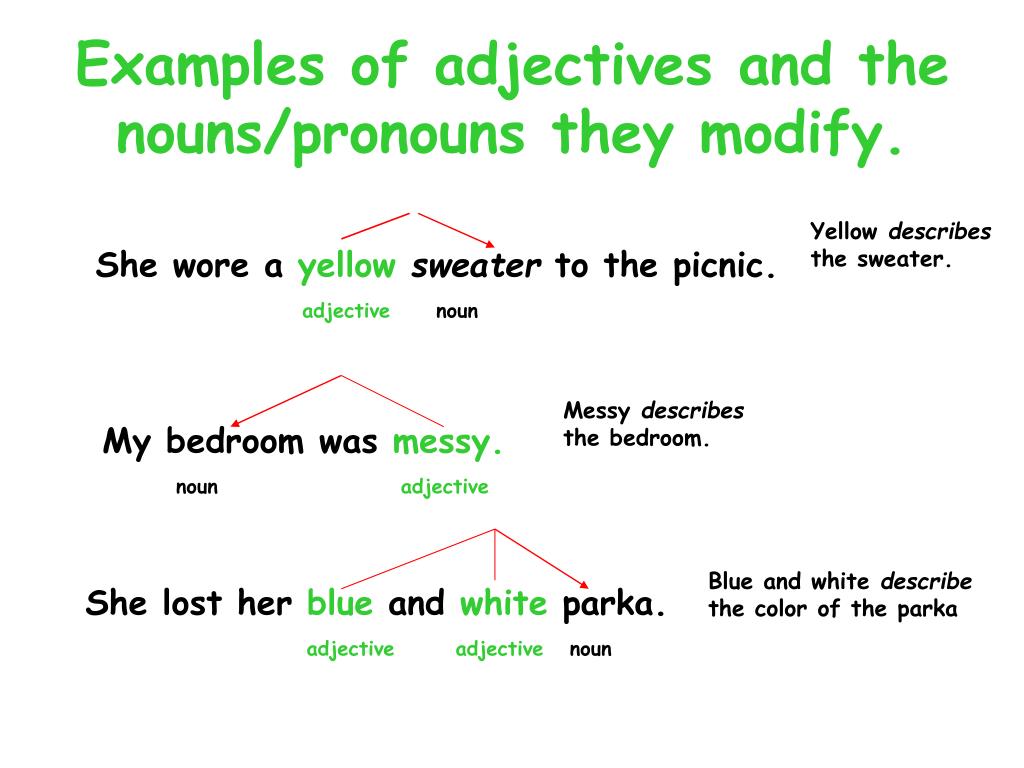
This is where the plot thickens. Nouns are your people, places, and things. Your dog, your house, your dreams. Pronouns are their stand-ins. He, she, it, they, we. You get the picture.
And the rule book, in its infinite wisdom, says adverbs don’t directly hang out with them. They don’t describe them. They don't tell us how the noun is.
Take "a quickly car." Does that make sense? Nope. A car isn't quick; it goes quickly. The car itself is just… a car. The speed is how it moves.
Or "the here dog." Nope again. The dog is the dog. Where the dog is located is a different story, and that's usually an adverb telling us where.
The confusion often arises because adverbs can appear in sentences where nouns and pronouns are present. It's like seeing your friend at the party – they're there, but they're not necessarily talking to you. They might be talking to someone else.
The Sneaky Exceptions (Or Are They?)
Now, language is a wild frontier. And sometimes, things get a little… fuzzy. There are cases where it looks like an adverb might be modifying a noun or pronoun. And this is where the fun really begins, because we get to be linguistic detectives!
Consider this sentence: "That is really a good idea."
Here, "really" feels like it's modifying "good." But wait! "Good" is an adjective, and adjectives modify nouns. So, "good idea" means the idea has the quality of being good. And "really" is an adverb that is modifying the adjective "good." It's telling us to what extent the idea is good. It's intensifying the adjective.
So, while "really" isn't directly modifying "idea" (the noun), it's working in tandem with an adjective that is modifying the noun. It's like a support act for the main star. Still not a direct modification, but close enough to cause some eyebrow raises!
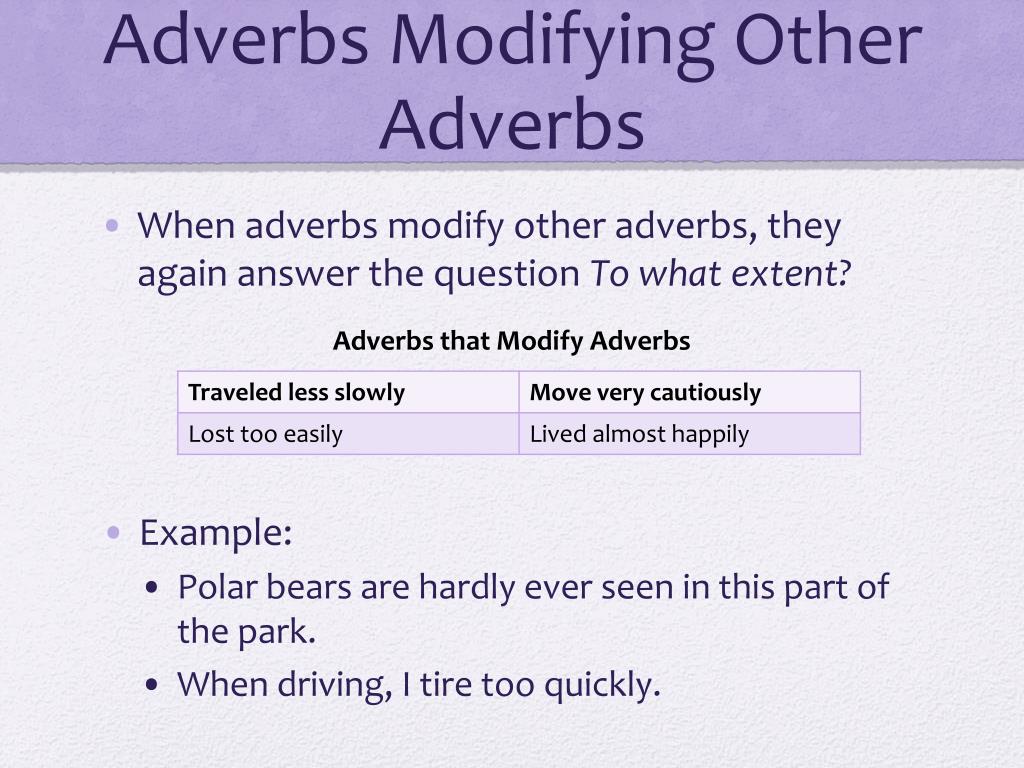
Another one: "He is very happy." Again, "happy" is an adjective describing "He" (a pronoun). "Very" is an adverb, and it's modifying the adjective "happy." It amplifies the happiness. It doesn't describe "He" directly, but rather his state of being.
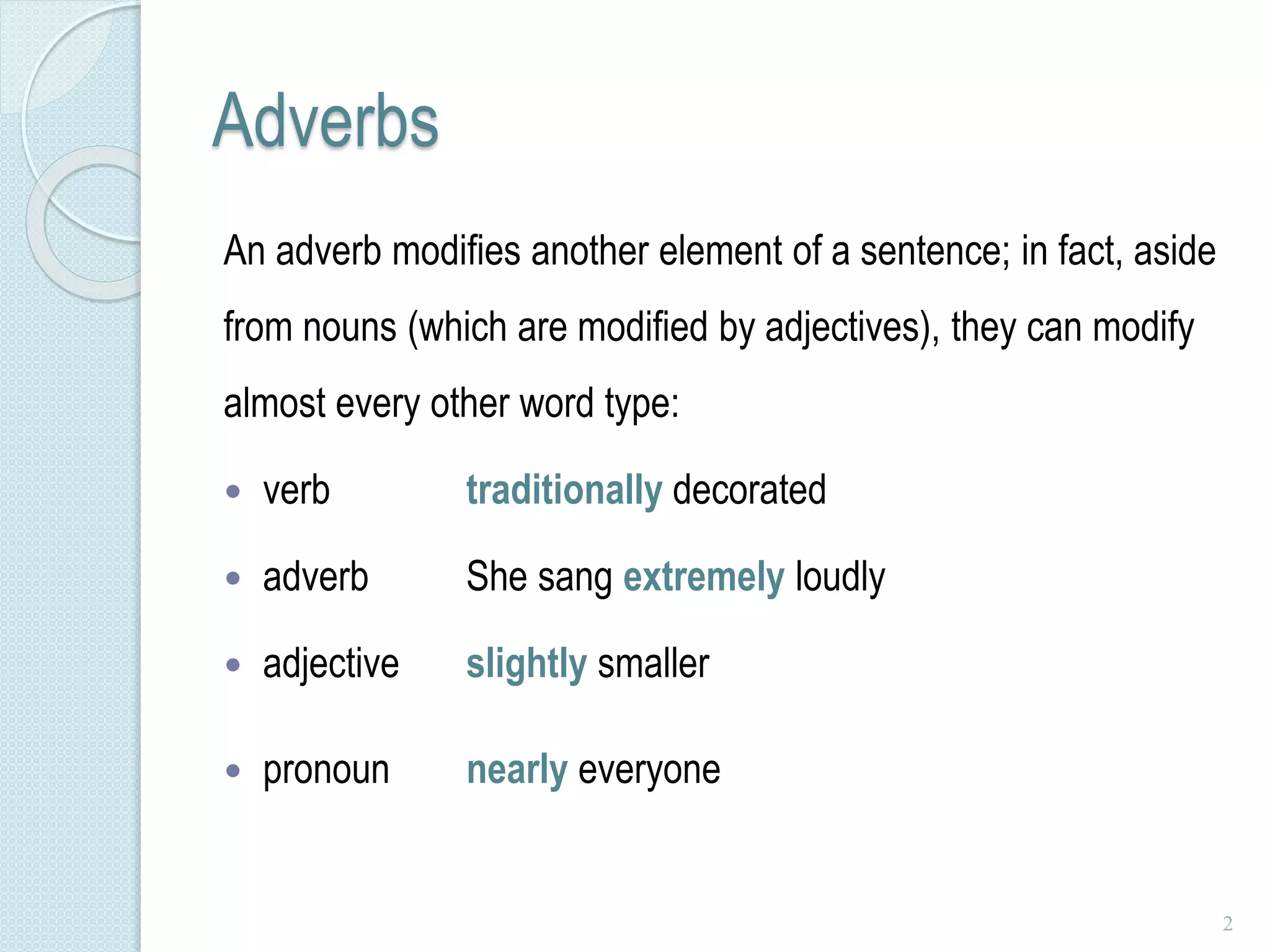
These are often called "intensifiers." They boost adjectives or other adverbs. They're super common, and they make our language so much more expressive. But, technically, they're still adverbs modifying adjectives or other adverbs, not nouns or pronouns themselves. Phew! We're staying on the right side of the grammar fence. Mostly.
The Real Dirt on Adverbs
Let’s get back to the core truth. Adverbs are modifiers. But of what?
They primarily modify:
- Verbs: (The most common gig!) "She painted artistically."
- Adjectives: "That was a remarkably talented performance."
- Other Adverbs: "He ran incredibly fast."
That's their bread and butter. Their raison d'être. Their jam. And they do it with flair!
Why This Little Fact is Actually Kinda Cool
So, why bother with this True/False? Why get excited about what adverbs don't do? Because understanding these distinctions helps us appreciate the intricate dance of words. It’s like knowing how a car engine works. You don't need to be a mechanic, but knowing the basics makes you appreciate the engineering.
It helps us write more clearly. It helps us understand why certain sentences sound "right" and others sound "off." It gives us a deeper appreciation for the power of language.
Plus, it’s a fun little piece of trivia to bust out at parties. "Hey, did you know adverbs don't modify nouns or pronouns? True story!" Guaranteed to make at least one person tilt their head and say, "Huh. I never thought about that." Success!
The Quirky World of Word Classes
Think about it: we have nouns doing their thing, verbs doing their thing, adjectives adding their descriptions, and adverbs… well, adverbs are the super-enthusiastic commentators on the whole spectacle. They're the life of the grammatical party, always chiming in with more info.
The fact that they don't directly modify nouns and pronouns is a key part of their identity. It's what separates them from adjectives. Adjectives are the ones who get to hang out directly with nouns and pronouns, telling us what they're like. Adverbs are the ones who are more interested in the action or the description itself.
It’s a subtle but important difference. And once you start noticing it, you’ll see it everywhere. You’ll become a word detective, spotting adverbs in their natural habitat, diligently modifying verbs, adjectives, and fellow adverbs.
A Final Thought on Our Adverbial Adventure
So, to recap: "Adverbs modify nouns and pronouns." FALSE.
But we also learned that they often team up with adjectives that do modify nouns and pronouns, like super-powered sidekicks. It’s a testament to the fluid, ever-evolving nature of language. It’s not always black and white. It’s more of a beautiful, vibrant gradient.
Keep an eye out for those adverbs. They're everywhere, working hard to make our language more descriptive and engaging. And remember, while they might not be directly modifying your favorite noun, they're definitely making the sentence a whole lot more interesting. Happy word-nerding!